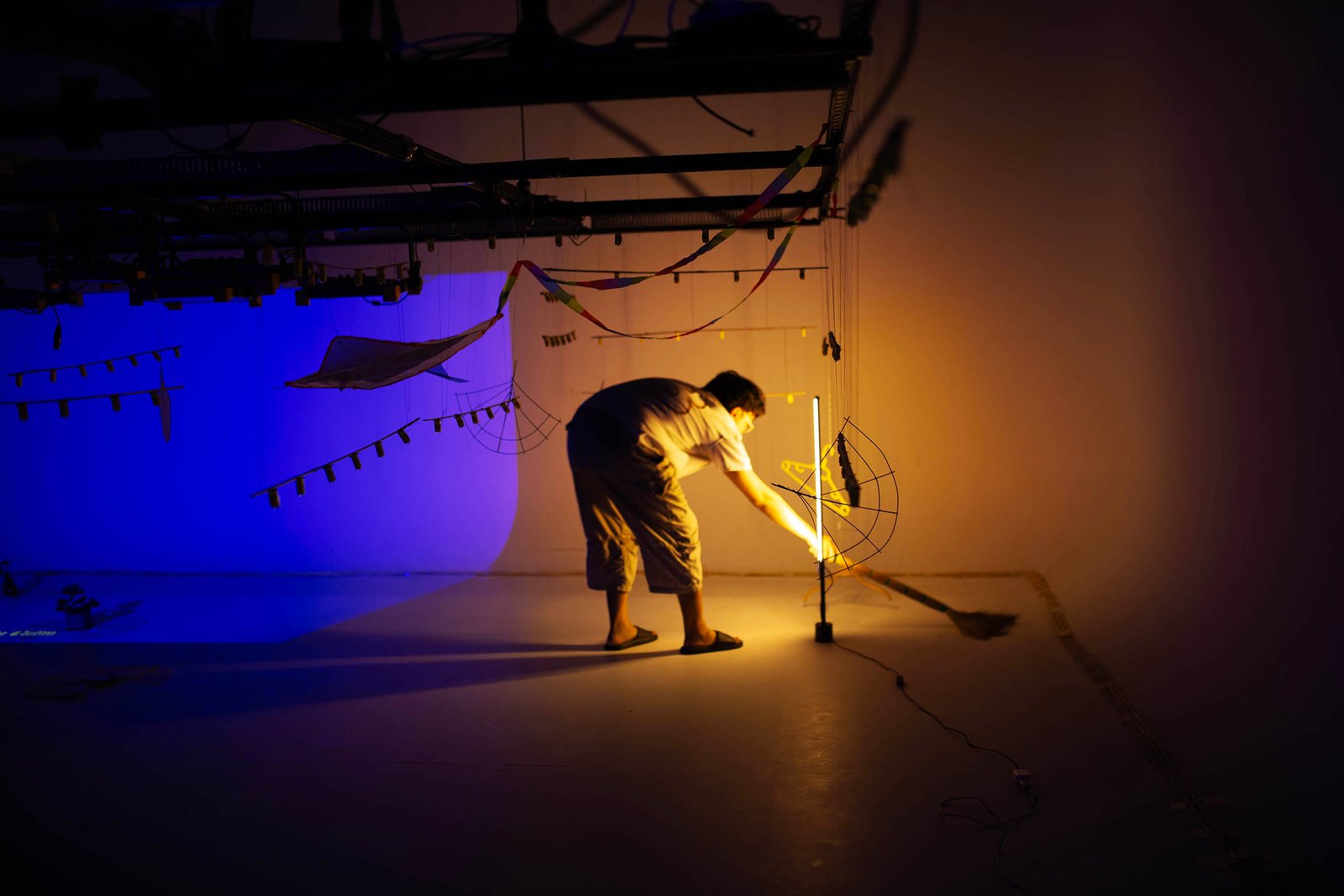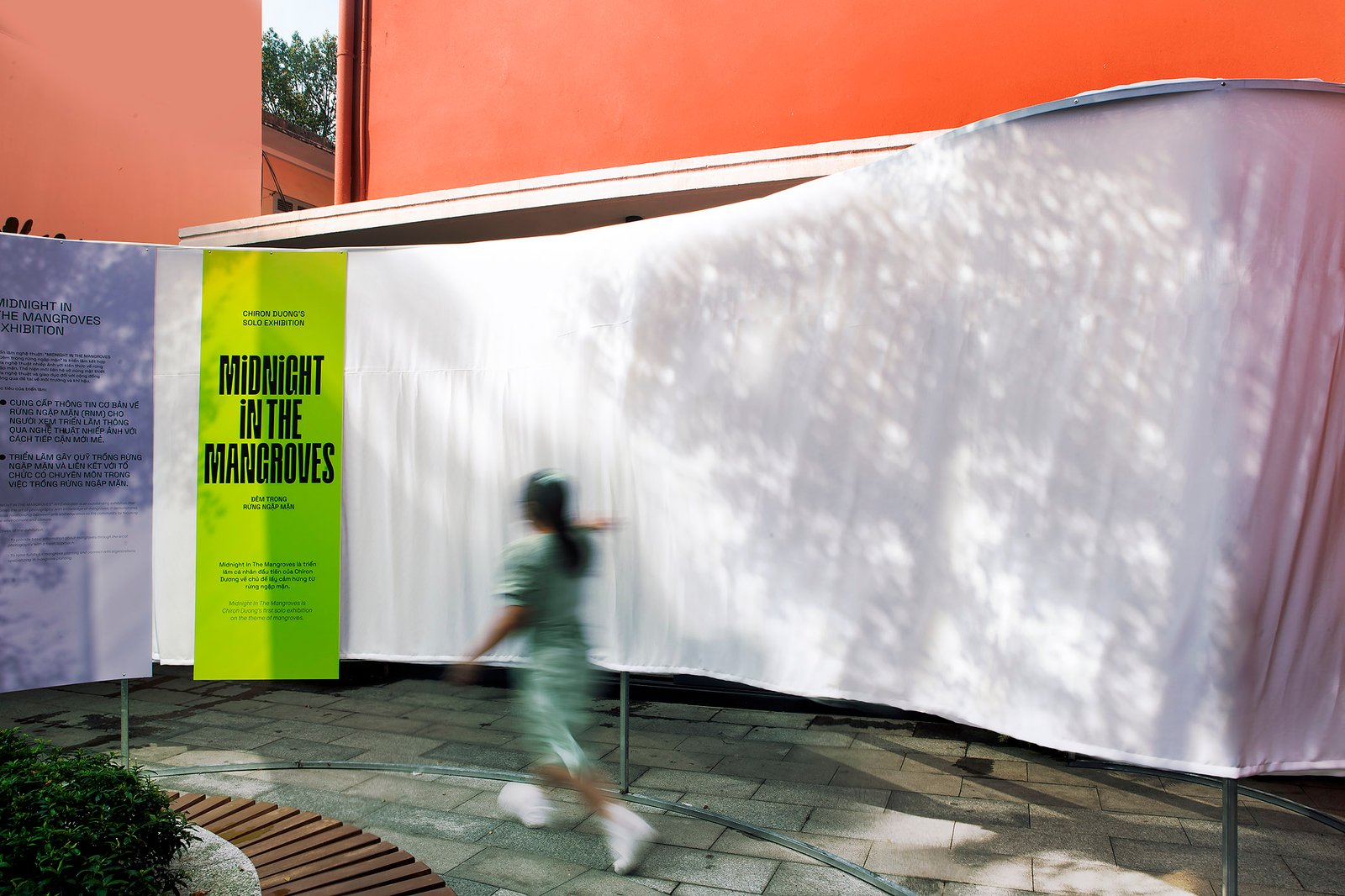
“MIDNIGHT IN THE MANGROVES” EXHIBITION
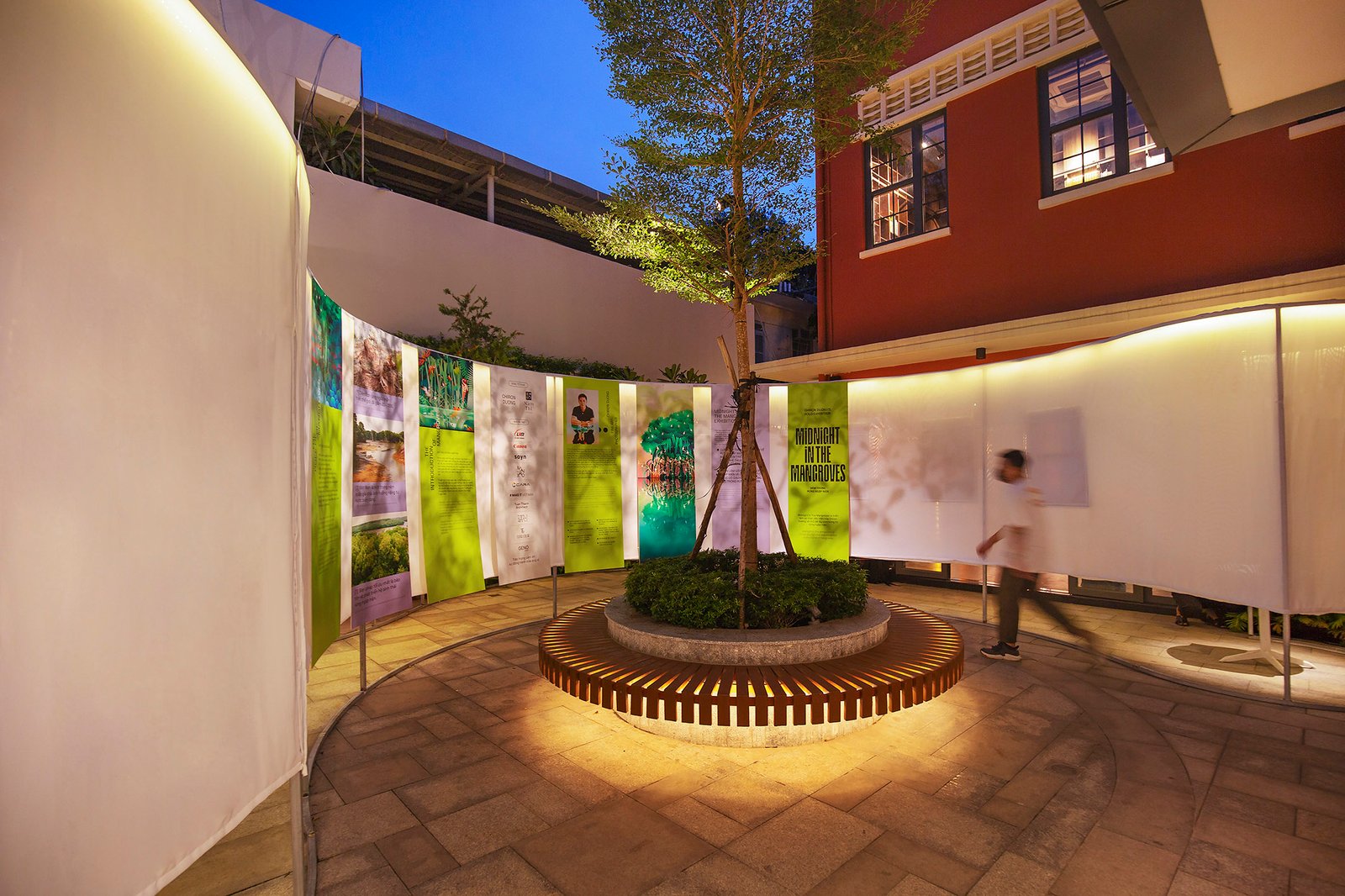
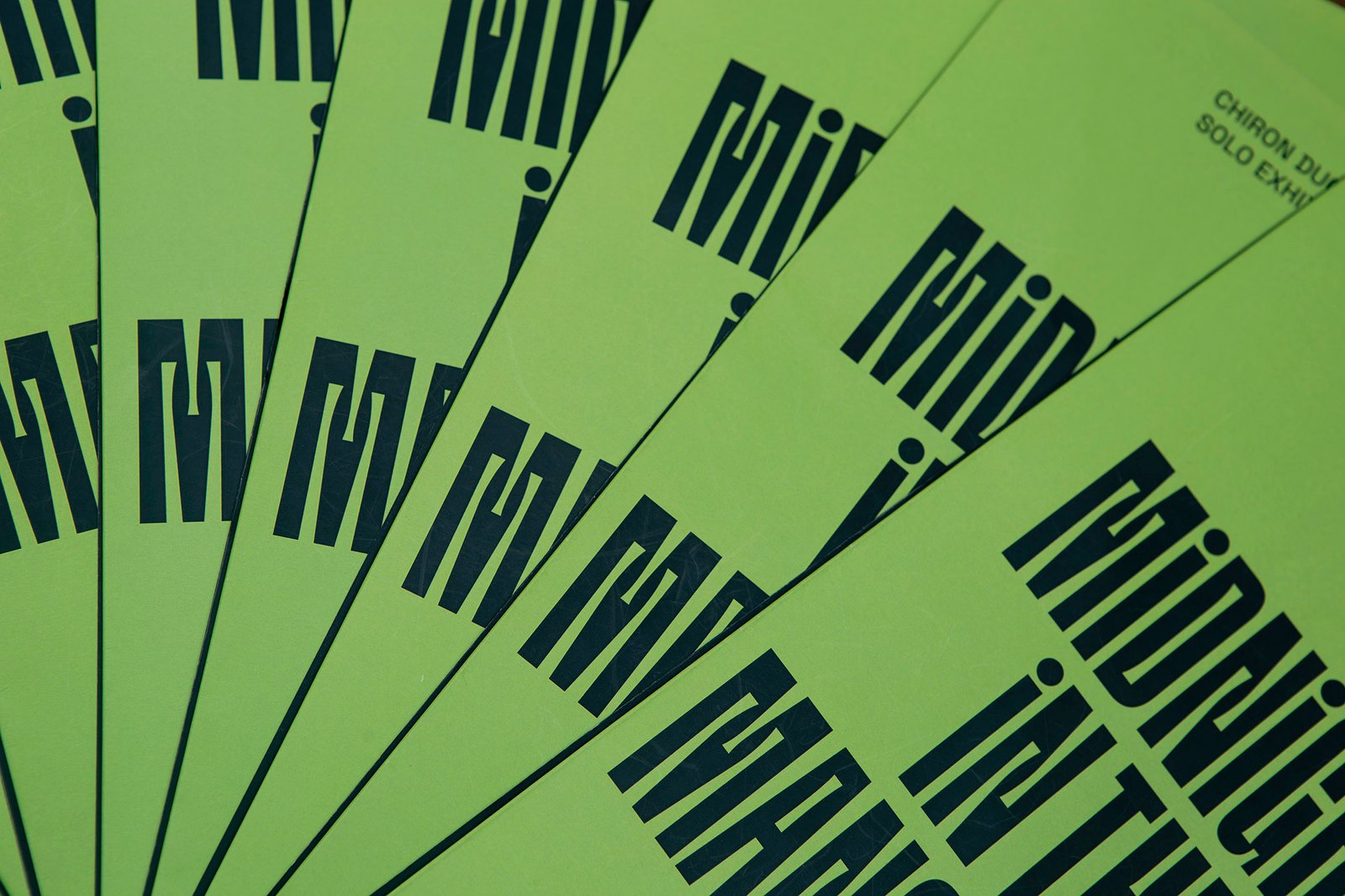
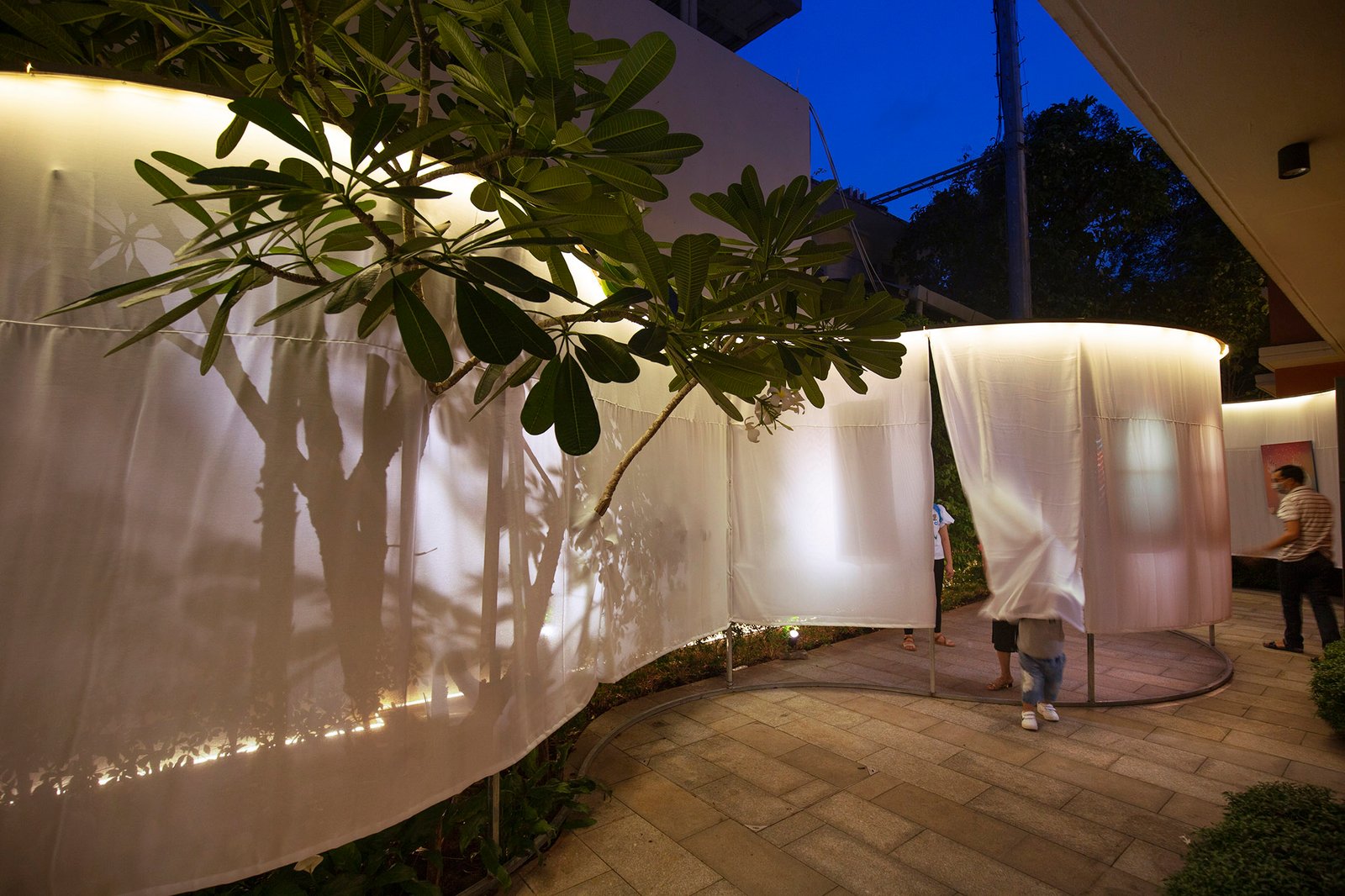
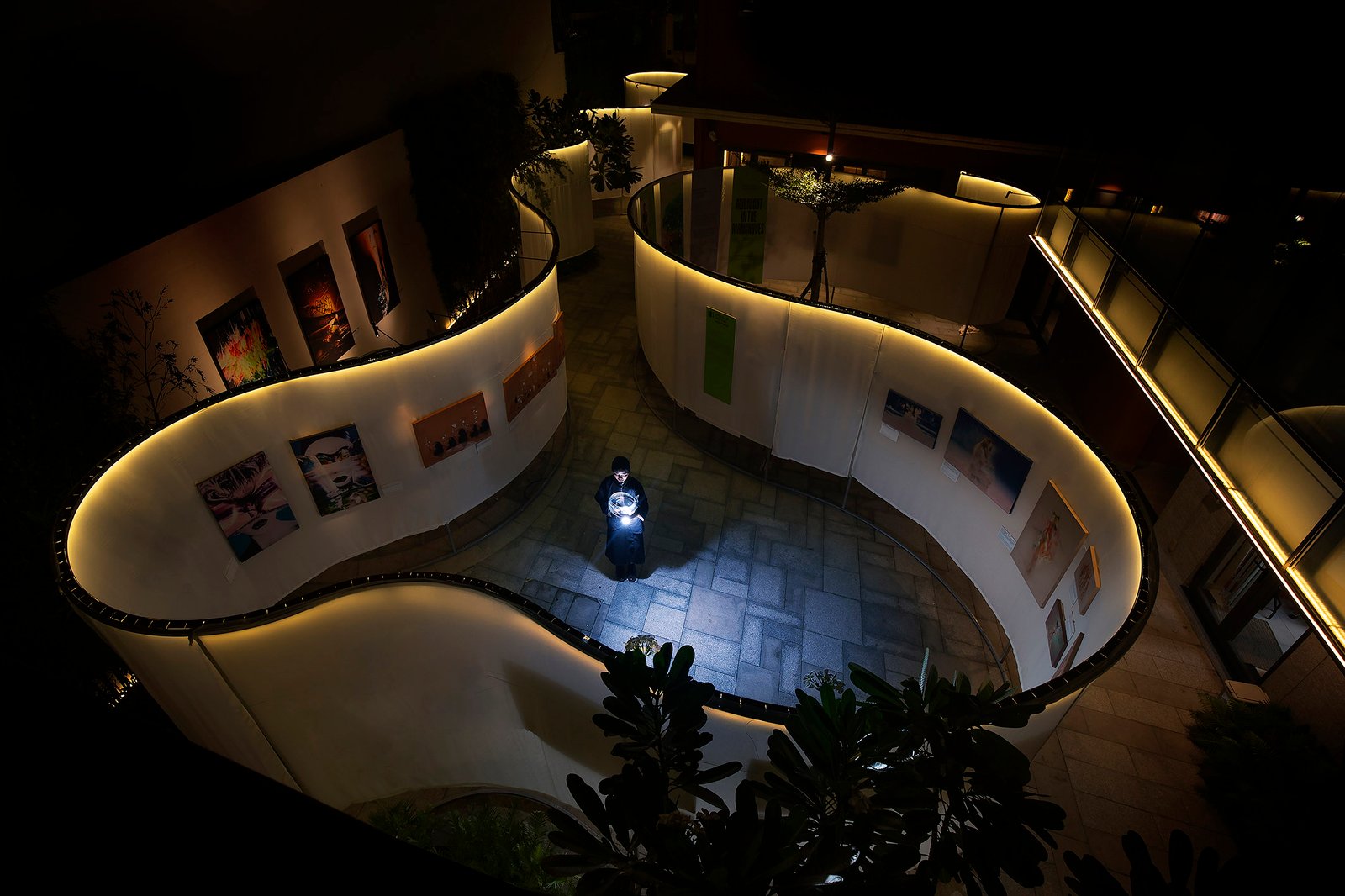
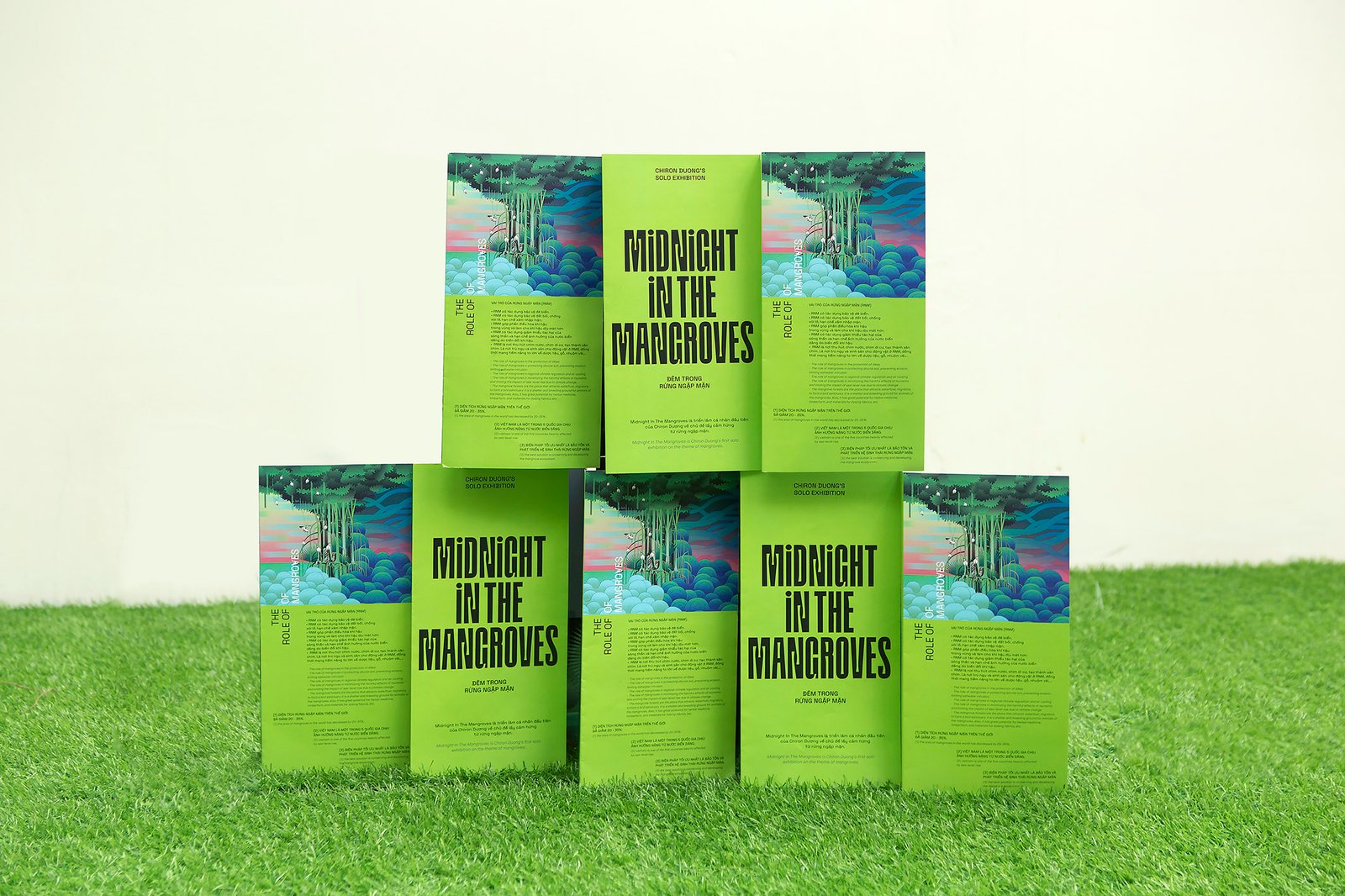
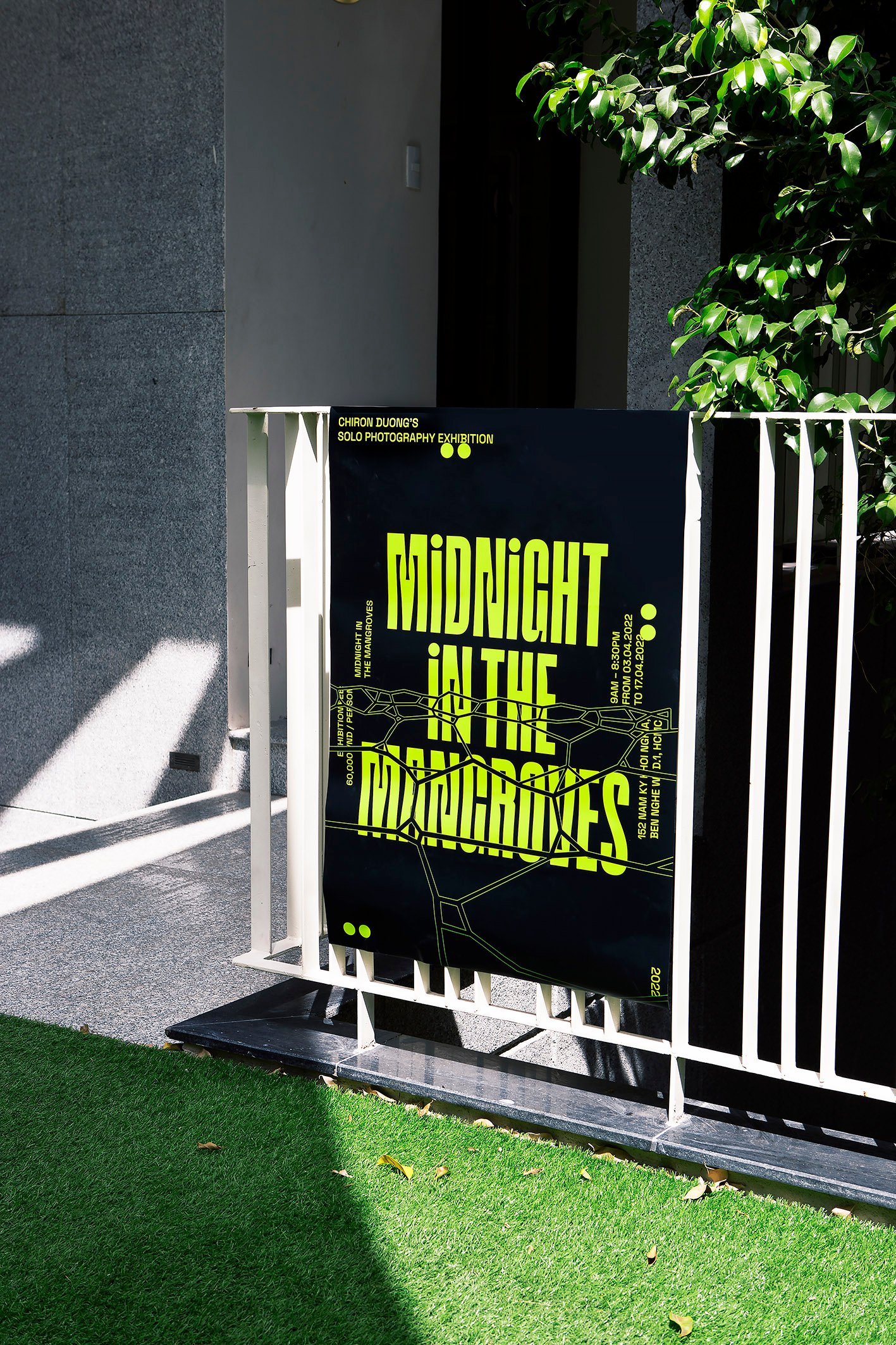
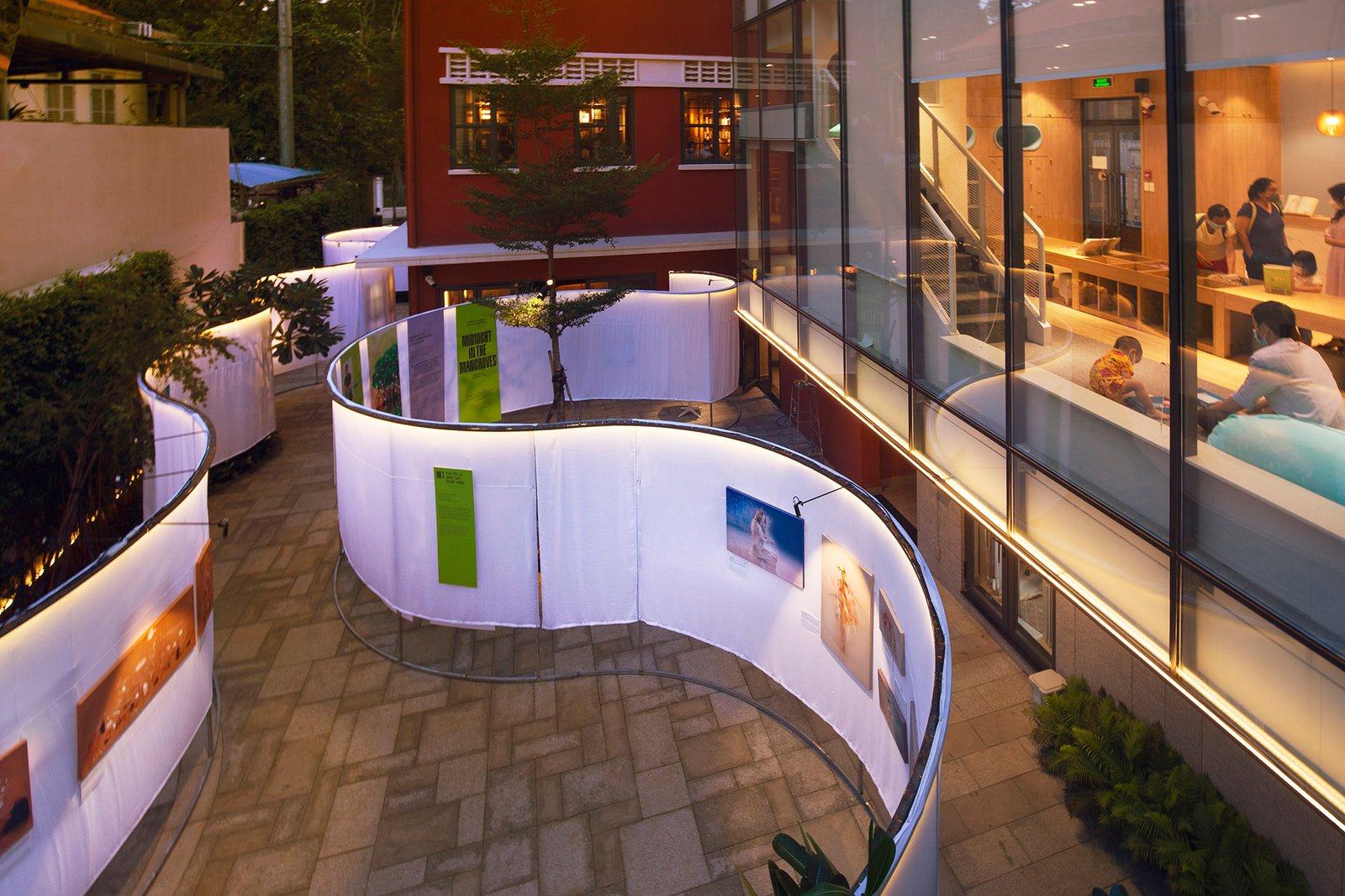
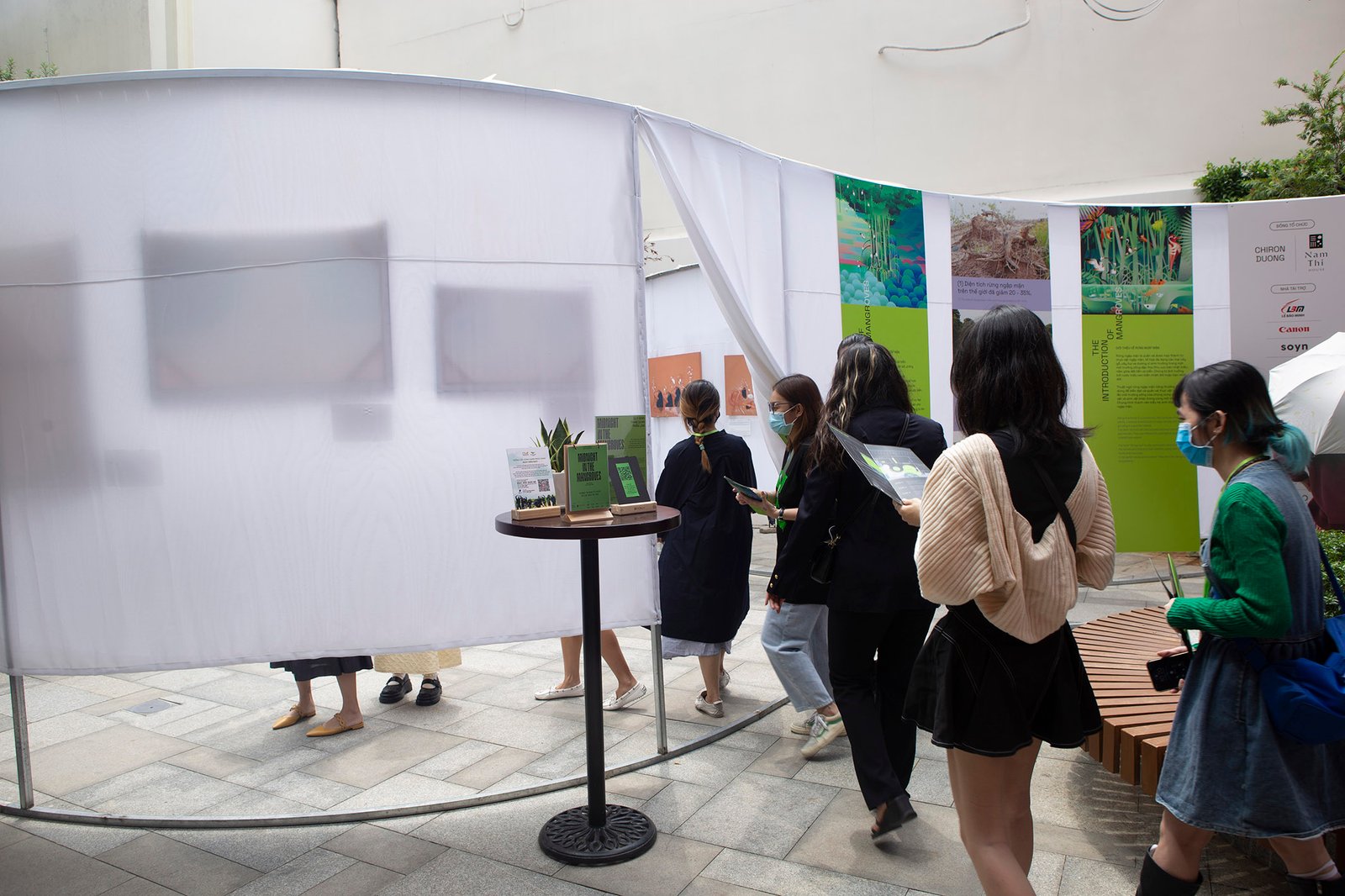
Ho Chi Minh City, March 25, 2022 – Nam Thi House Cultural Space is pleased to collaborate with ChiLab Vietnam on the first solo exhibition titled MIDNIGHT IN THE MANGROVES. The exhibition will take place from April 3, 2022, to April 17, 2022, at Nam Thi House, 152 Nam Ky Khoi Nghia Street, Ben Nghe Ward, District 1, Ho Chi Minh City.
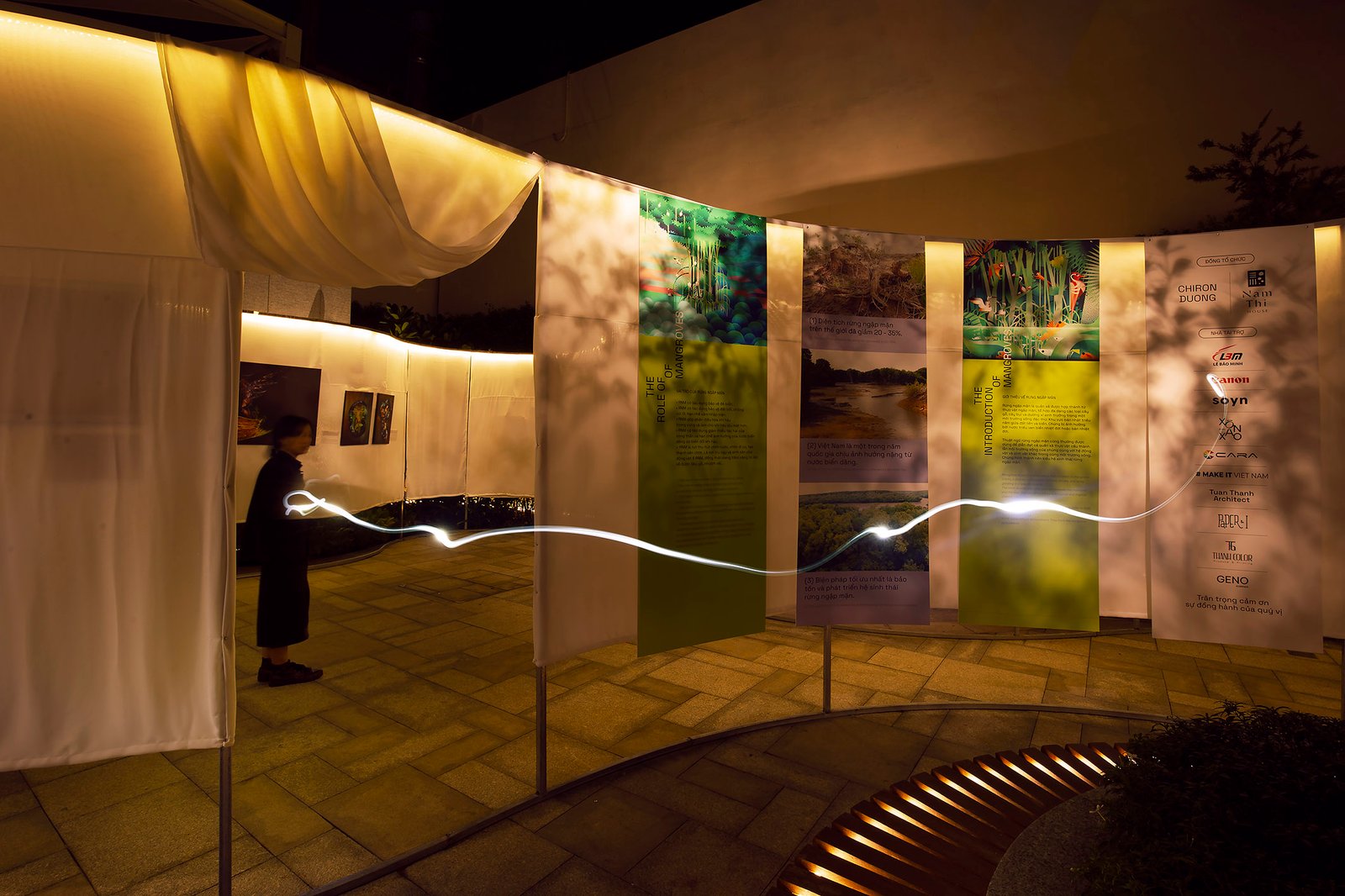
The exhibition MIDNIGHT IN THE MANGROVES is honored to have the support and collaboration of Xôn Xao Studio, Field, ChiLab Vietnam Paper & I café, Canon Lê Bảo Minh, Cara Lighting, Soyn, Make It Vietnam, Tuan Thanh Architect, The Offset, and Thanh Color.
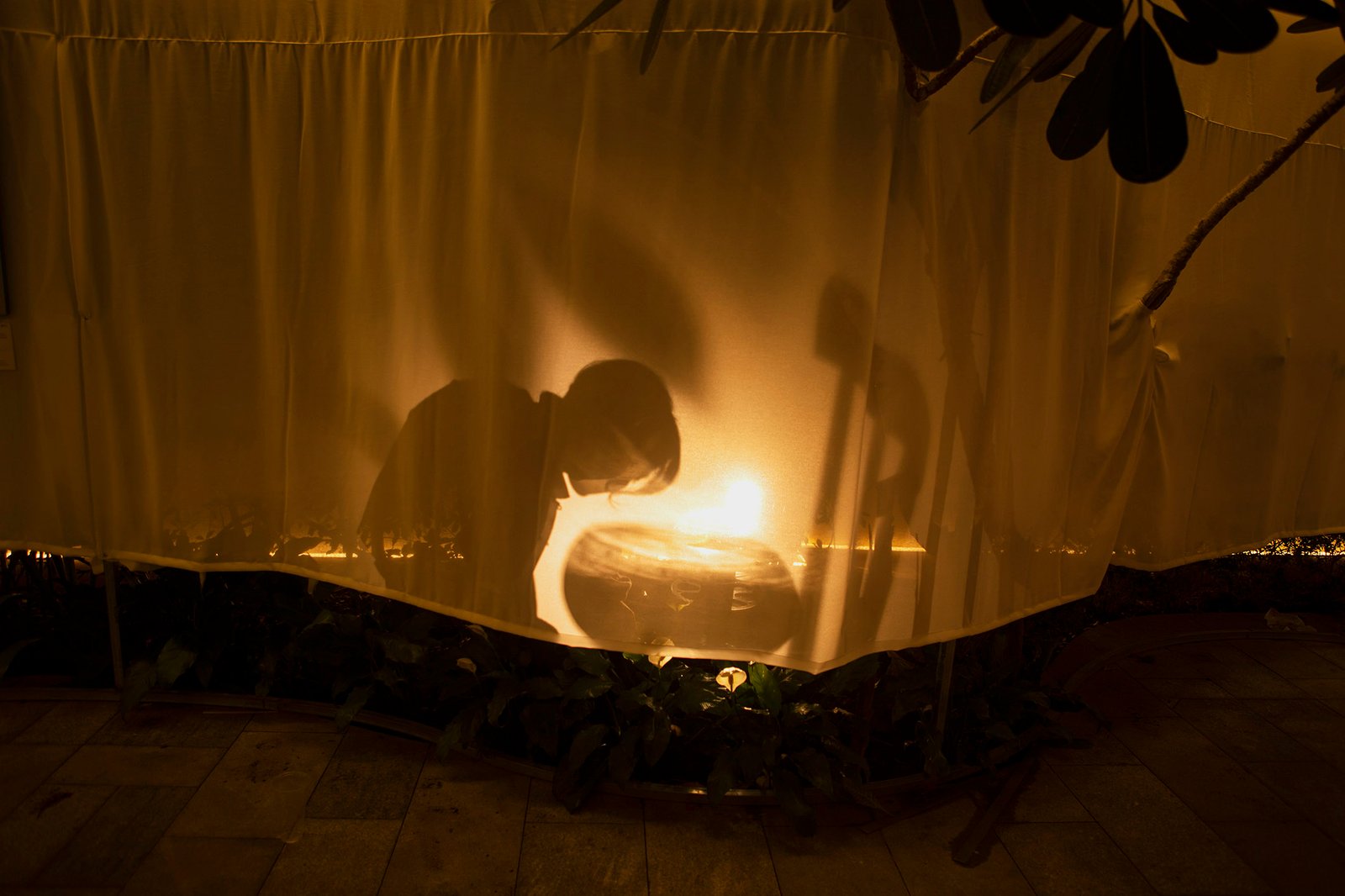
“MIDNIGHT IN THE MANGROVES” Art Exhibition that combines the art of photography with knowledge of mangroves. It demonstrates the close relationship between arts and education in the community by focusing on the environment and climate.
OBJECTIVES OF THE EXHIBITION
OBJECTIVE 1
To provide basic information about mangroves through the art of photography with a fresh approach.
OBJECTIVE 2
To raise funds for mangrove planting and connect with organizations specializing in mangrove planting.
PROLOGUE
Hemingway once used the term “The Lost Generation” to talk about the deprivations and misfortunes of those in early adulthood during World War I. However, the “The Lost Generation” phenomenon always exists in any period or country with different manifestations.
Vietnam’s young generation in Vietnam is now living in favorable conditions for global economic development, yet is directly affected by climate change. And the most prominent of those is global warming, which causes sea-level rise, natural disasters, etc.
According to the assessment of prestigious international research organizations such as the World Bank (WB), the Center for Environmental Systems Research (CESR), and the National Aeronautics and Space Administration (NASA), Vietnam is one of five countries in the world seriously affected by sea-level rise. As the best-proposed solution is to preserve the mangrove forest, now facing numerous challenges, the time pressure for the bordering countries is increasing. According to the Food and Agriculture Organization of the United Nations (FAO), the area of mangroves in the world has decreased by 20–35% since 1980, and we have lost 67% of the mangrove area in Vietnam compared to 1943.
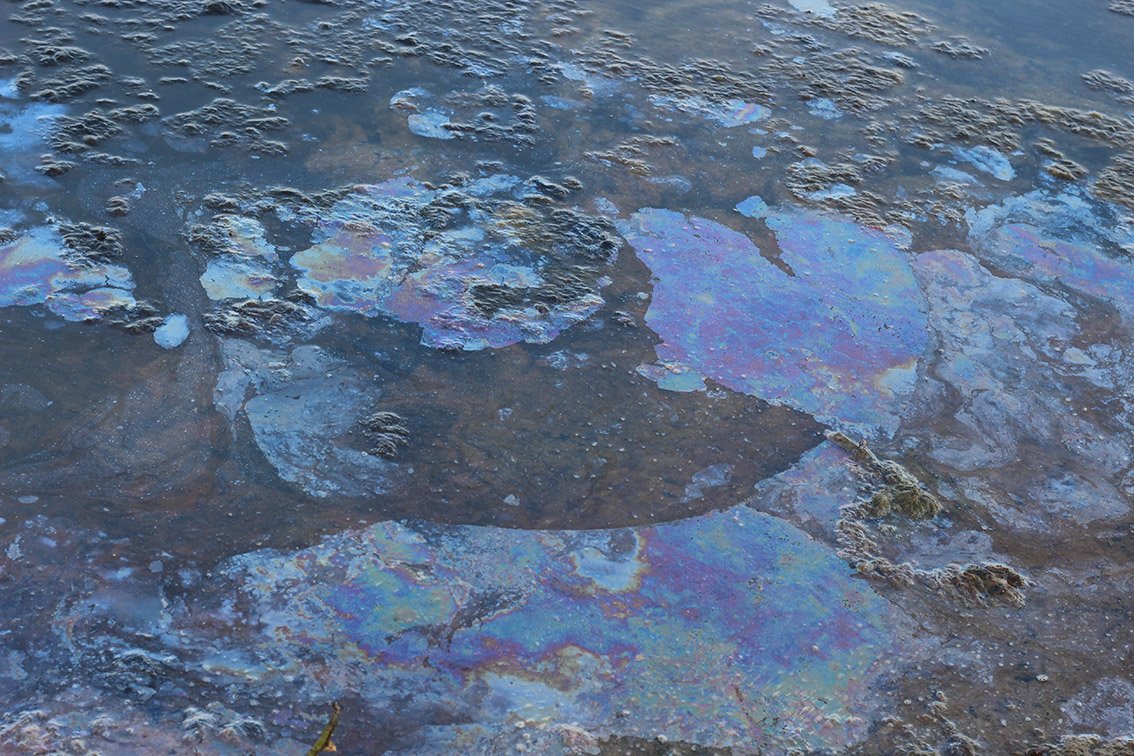
In that context, the local governments of the provinces bordering the sea in Vietnam are making efforts to limit the area of land that is gradually lost due to sea-level rise and annual natural disasters. Besides conserving and developing mangrove ecosystems to form an ecological wave shield, keeping land, encroaching sea, and limiting Salinity intrusion, these localities are step by steps towards developing a sustainable production economy associated with the potential of mangroves to avoid deforestation. In terms of culture & arts, they bring mangroves closer to the community through the model of Mangrove Park, a tourist area, and mangrove ecology. In particular, the potential of art also contributes to nurturing the love for nature and promoting the specific role of individuals in protecting mangroves, creating a foundation for awareness and action for today and future generations.
Through this project, even just a small journey for us, we hope to find more voices and actions from everyone. Also, this is an opportunity to exchange and share the value of the mangrove ecosystems with the younger generation.
Sincerely,
ChiLab
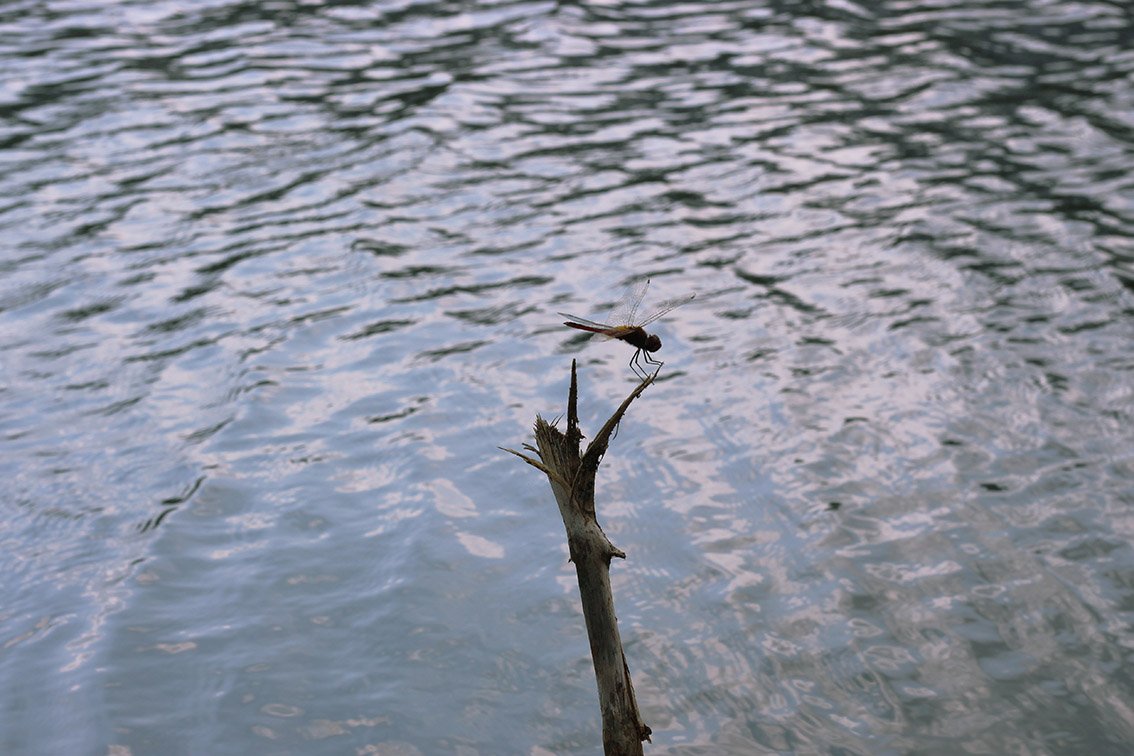
THE INTRODUCTION OF MANGROVES
1. What is a mangrove forest?
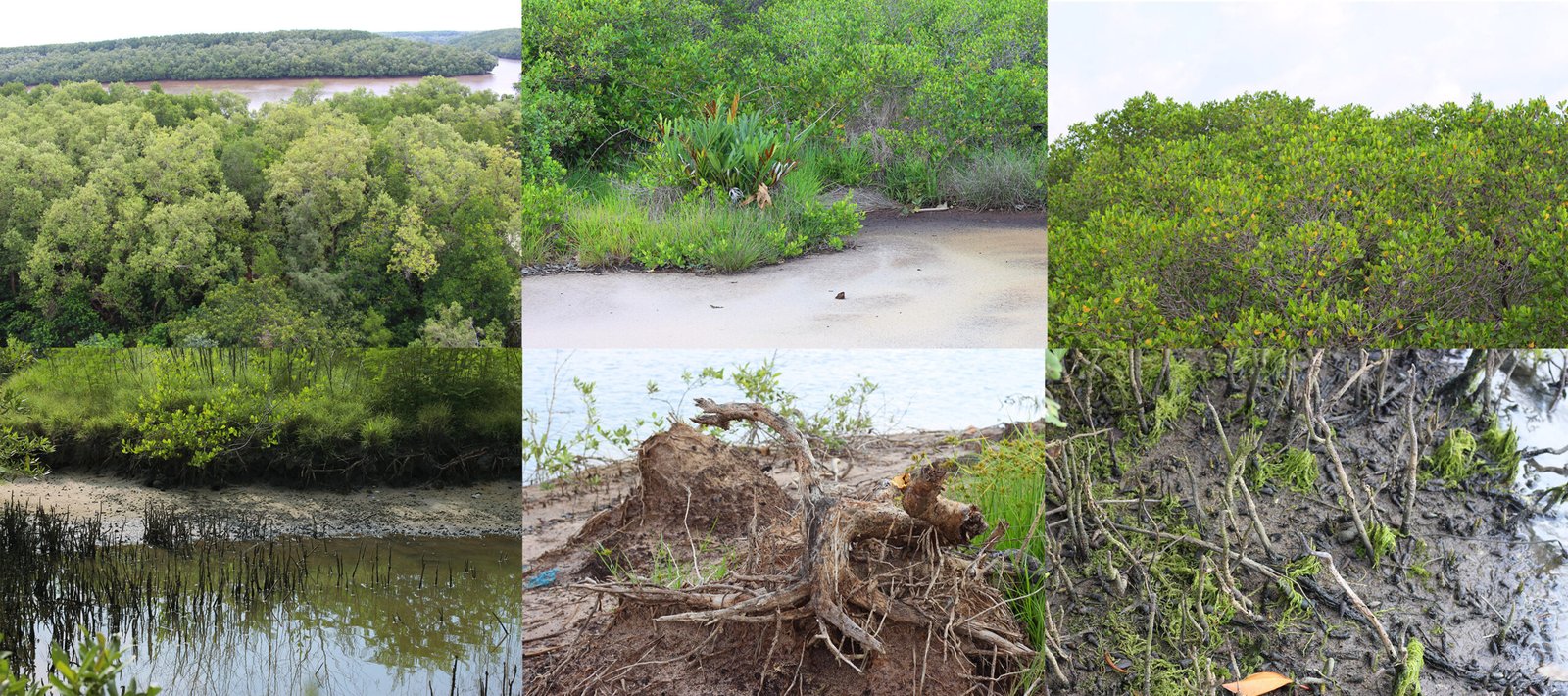
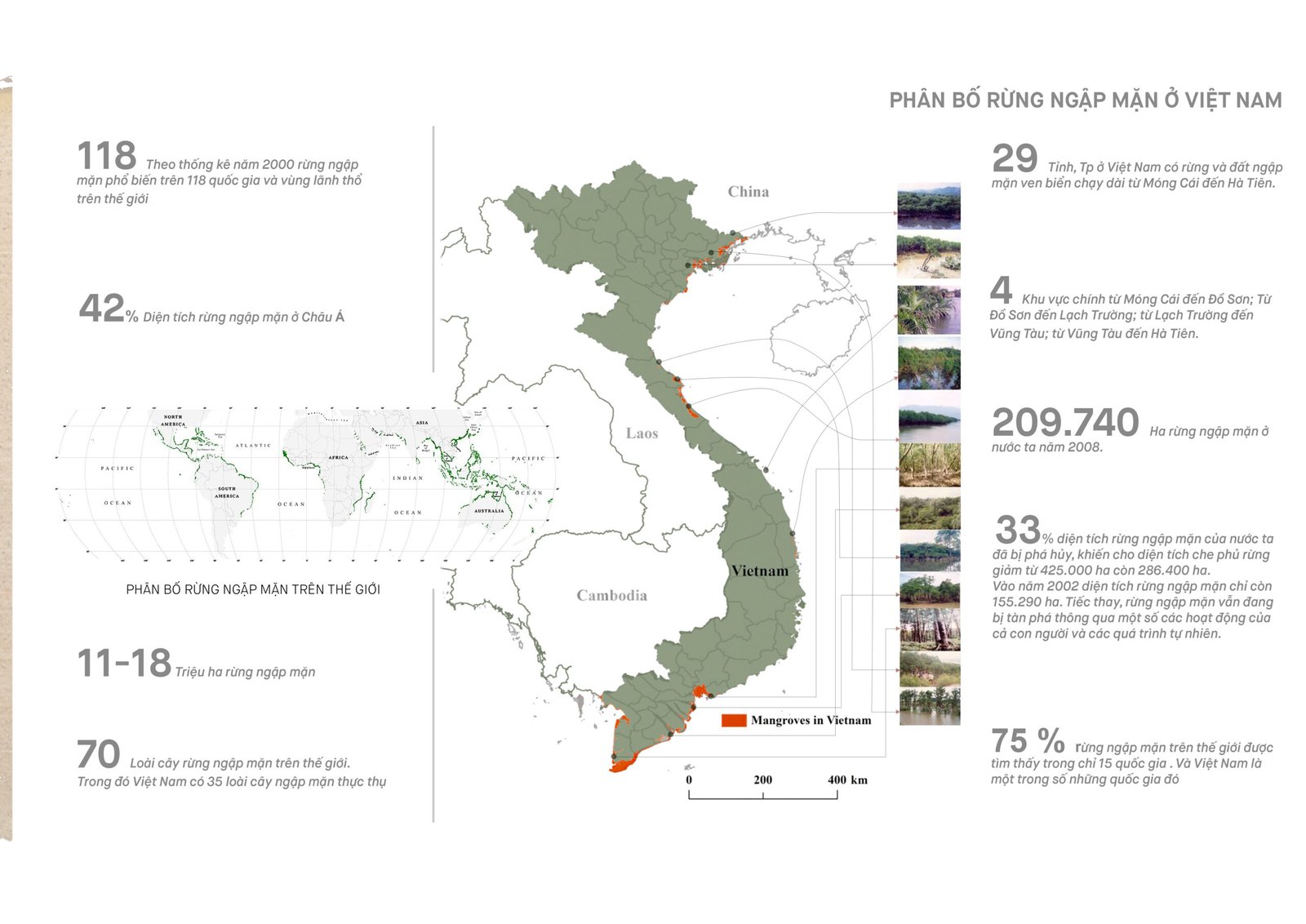
Mangrove forest is a community made up of mangrove plants, a diverse combination of trees, shrubs, and ferns growing in a specific habitat: The semi-diurnal tide area located between the mainland and the sea. They are affected by subtropical and tropical coastal tidal waters. It covers an area of 137,760 km², usually from latitude 25 North to latitude 25 South. Mangroves are well-known in 118 countries around the world.
The term mangrove is also commonly used to refer to both the constituent flora and their habitats, along with other fauna and creatures in the same natural environment. They form the mangrove ecosystems.
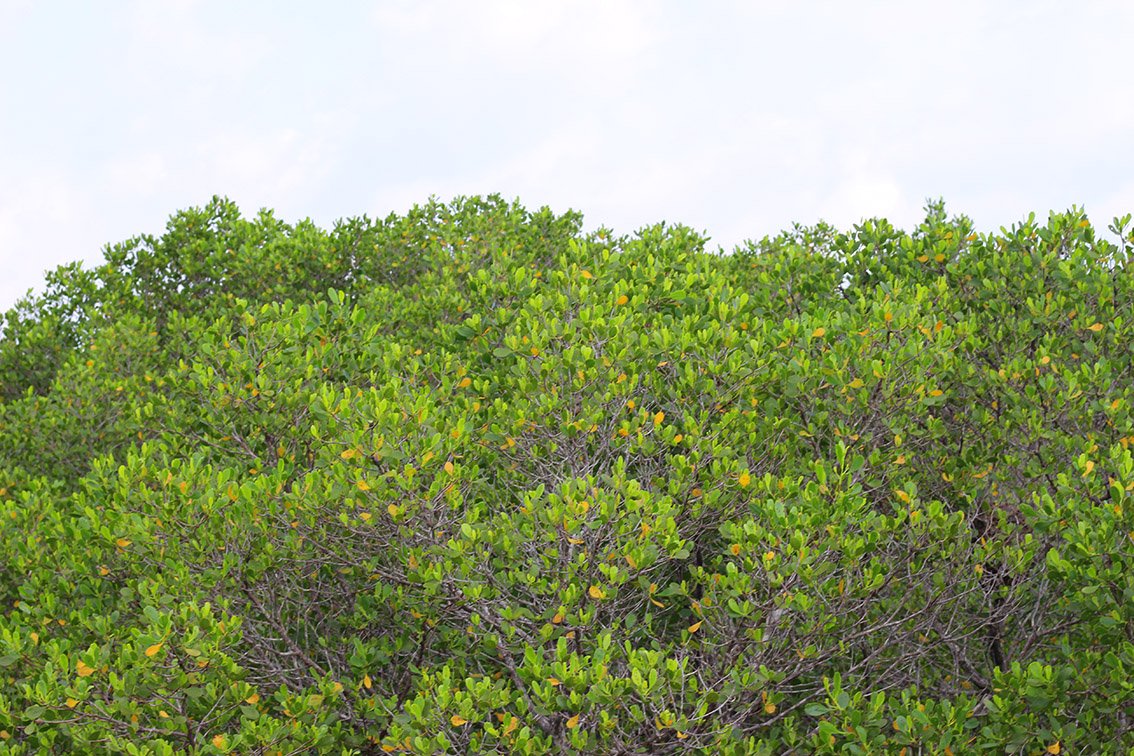
2. The mangrove ecosystems
The mangrove flora ecosystems are rich resources consisting of the original mangrove flora and other species participating in the area.
In Vietnam, there are 35 mangrove species in the majority and 40 non-native ones.
Abundant flora includes plants such as Aegiceras, Rhizophora, Bruguiera, Melaleuᴄa, Avicennia, etc. In addition, there is also the appearance of several plants and shrubs capable of living in the mangrove environment.
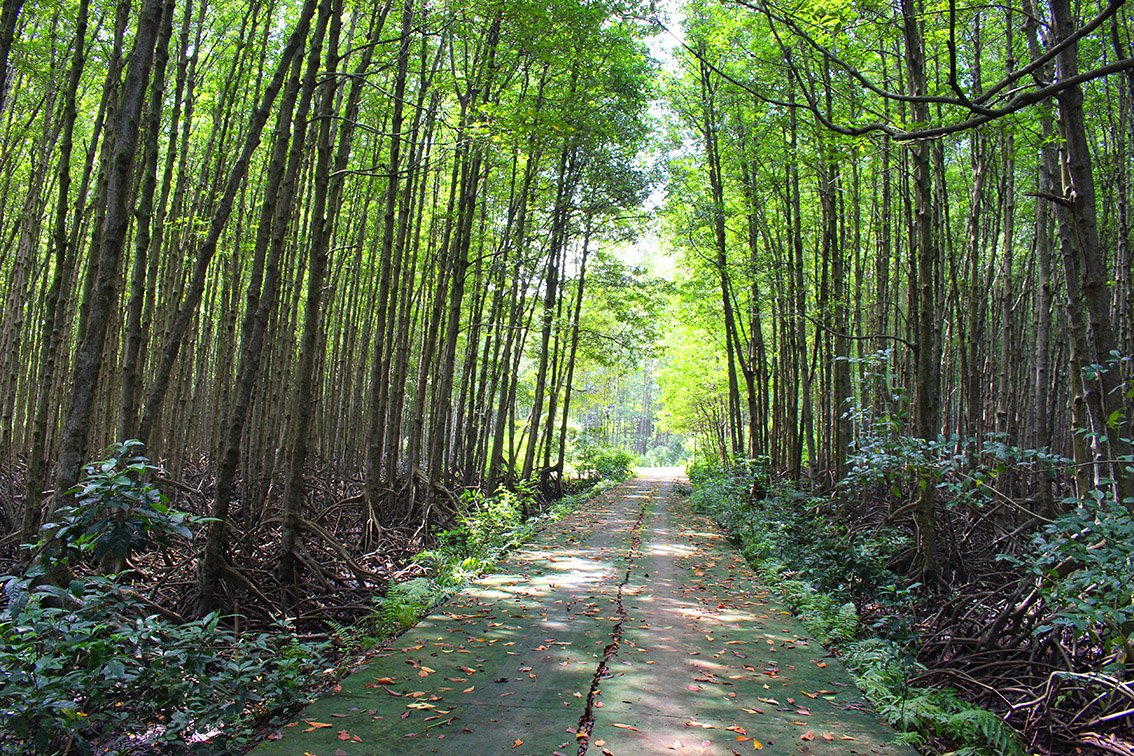
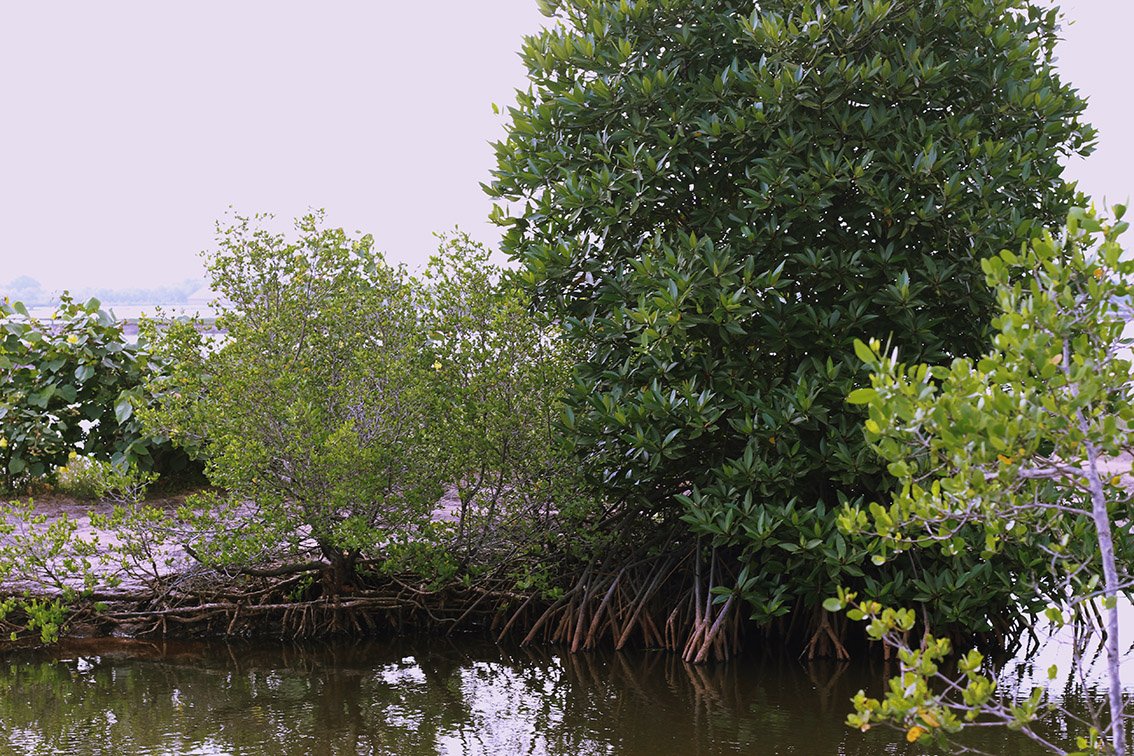
A special feature is that the trees in this mangrove forest all have bunched roots like fishing baskets. Growing interlaced helps them grip firmly and spread around. This forest root system also helps to reduce the velocity of the stream. In addition, it facilitates faster sediment accumulation in coastal estuaries. Therefore, mangroves have great merit in reducing wave energy, natural disasters, storms, and hurricanes from the sea etc.
The fauna
The mangrove forest is home to various animals, especially 80% of all sea creatures living here. We can mention some typical animals such as:
- Aquatic animals such as shrimp, crabs, fish, turtles, shellfish, benthic animals, etc.
- Terrestrial and arboreal animals such as monkeys, storks, cranes, wild boars, etc.
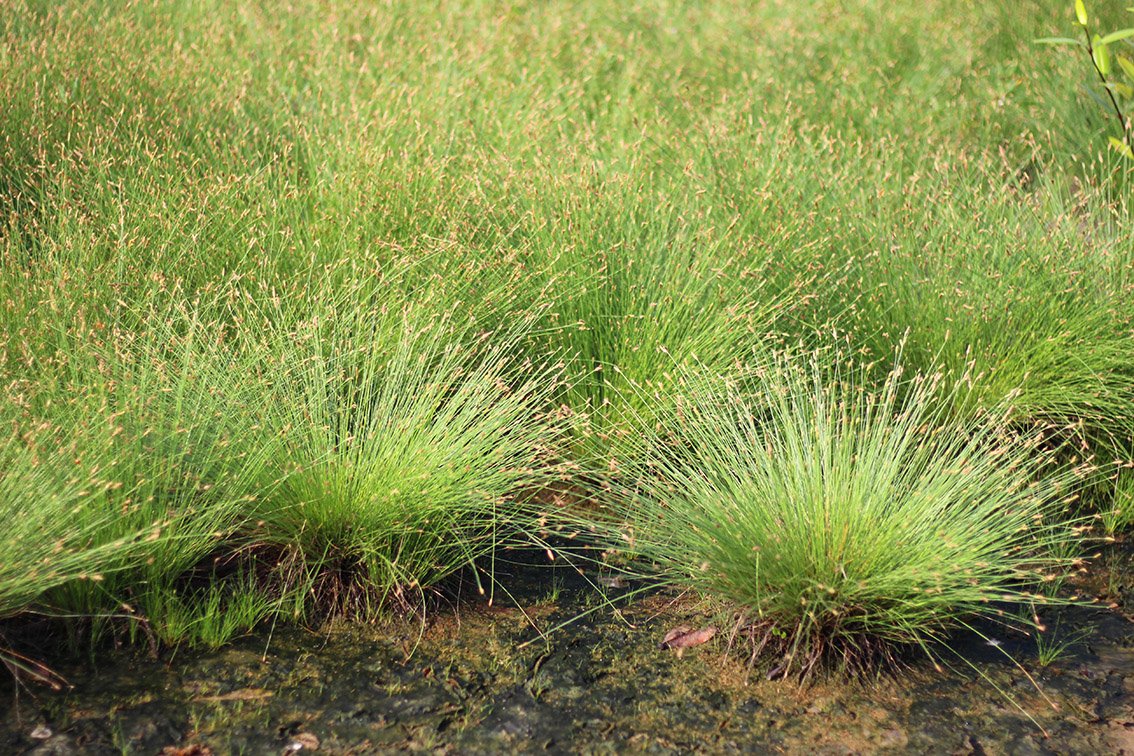
- In addition, this place is also a habitat for many microorganisms such as algae, fungi, ferns, etc.
Ecosystems in mangroves are mutually dependent on life and development. Many animals born in rivers and seas are moved with the tides into the forest. They rely on food sources from fallen plants, which decompose into organic humus.
3. The role of mangroves
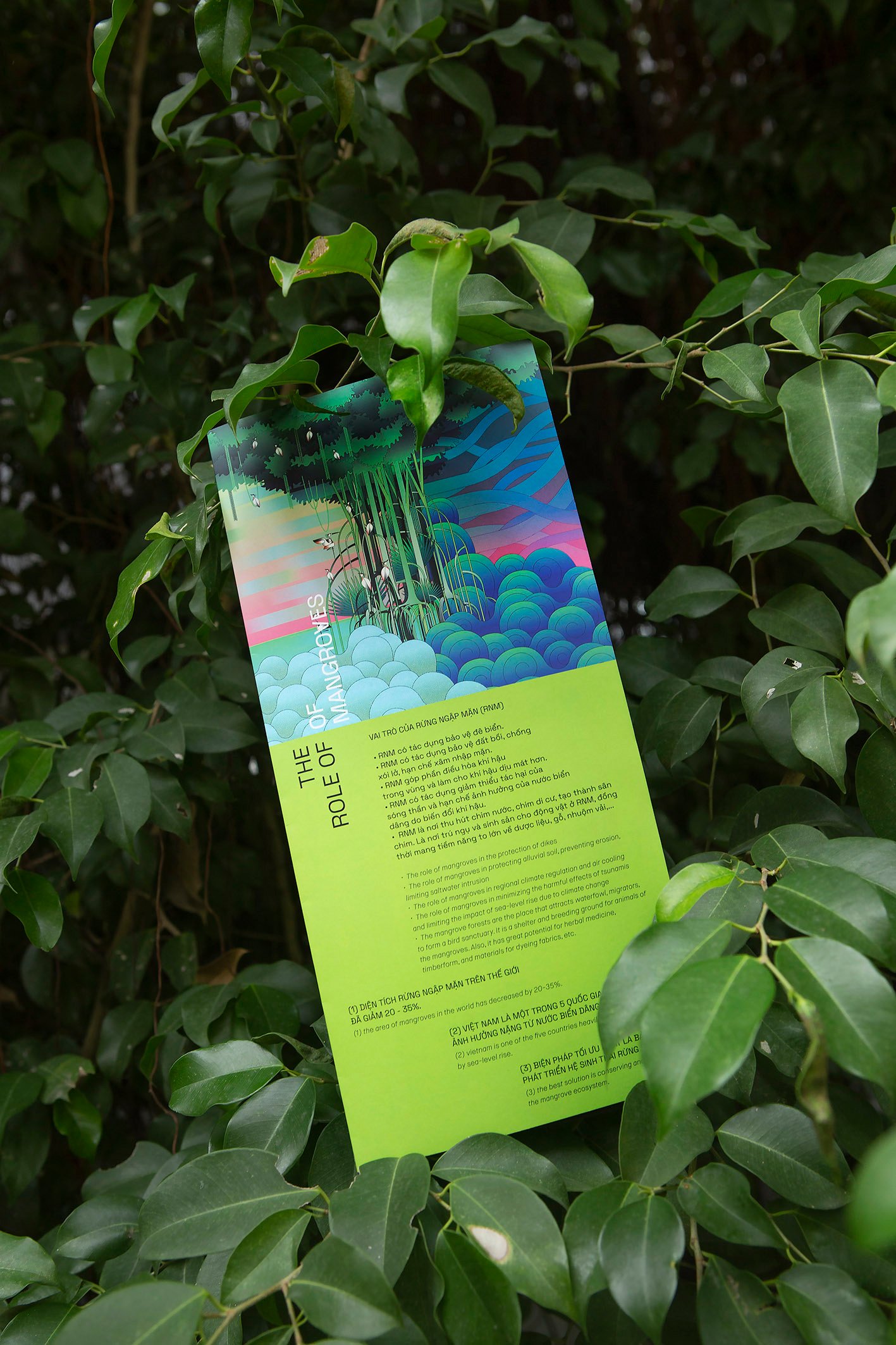
- The role of mangroves in sea dike protection
- The role of mangroves in protecting alluvial soil, preventing erosion, limiting saltwater intrusion
- The role of mangroves in regional climate regulation and air cooling
- The role of mangroves in minimizing the harmful effects of tsunamis and limiting the impact of sea-level rise due to climate change
- The mangrove forests are the place that attracts waterfowl, migrators, forming a bird sanctuary. It is a shelter and breeding ground for animals of the mangroves. Also, it has great potential for medicinal herbs, timber, materials for dyeing fabrics, etc.
4. Distribution of mangroves in the world and Vietnam
According to industry experts, the total acreage of mangrove forests in Vietnam is about 200,000 hectares. Ranked in the top of countries with mangrove areas worldwide.
However, the area of mangrove forests is now facing serious threats. It shrinks the acreage and affects the entire ecosystem. The decline is due to deforestation, which is still happening nearly every day. Residents build embankments to make lagoons for aquaculture. In addition, there are other factors such as wind, storms, and waves that cause landslides and environmental pollution. And the government’s management policy has not paid much attention to this issue, etc.
5. Adaptability of mangroves to sea-level rise and climate change
Impacts of climate change on mangrove ecosystems
The habitat in mangroves changes or not depending on the rate of sea-level rise (SLR) change. When the speed of the SLR is greater than the limit rate of peat accumulation, the mangroves will be submerged in seawater and die. Peat accumulation is a process that combines physical resources and biological reactions.
Related phenomena and peat accumulation process (Miyagi, 1998)
Global warming
Human impacts
Forest dynamics
Biomass production
Sedimentation
Fluvial process
Marine process
Transport of POM (peat of mangroves)
Peat accumulation
Erosion
HWL (high water level)
MWL (mean water level)
Sea level change
Habitat movement
THE ARTWORKS
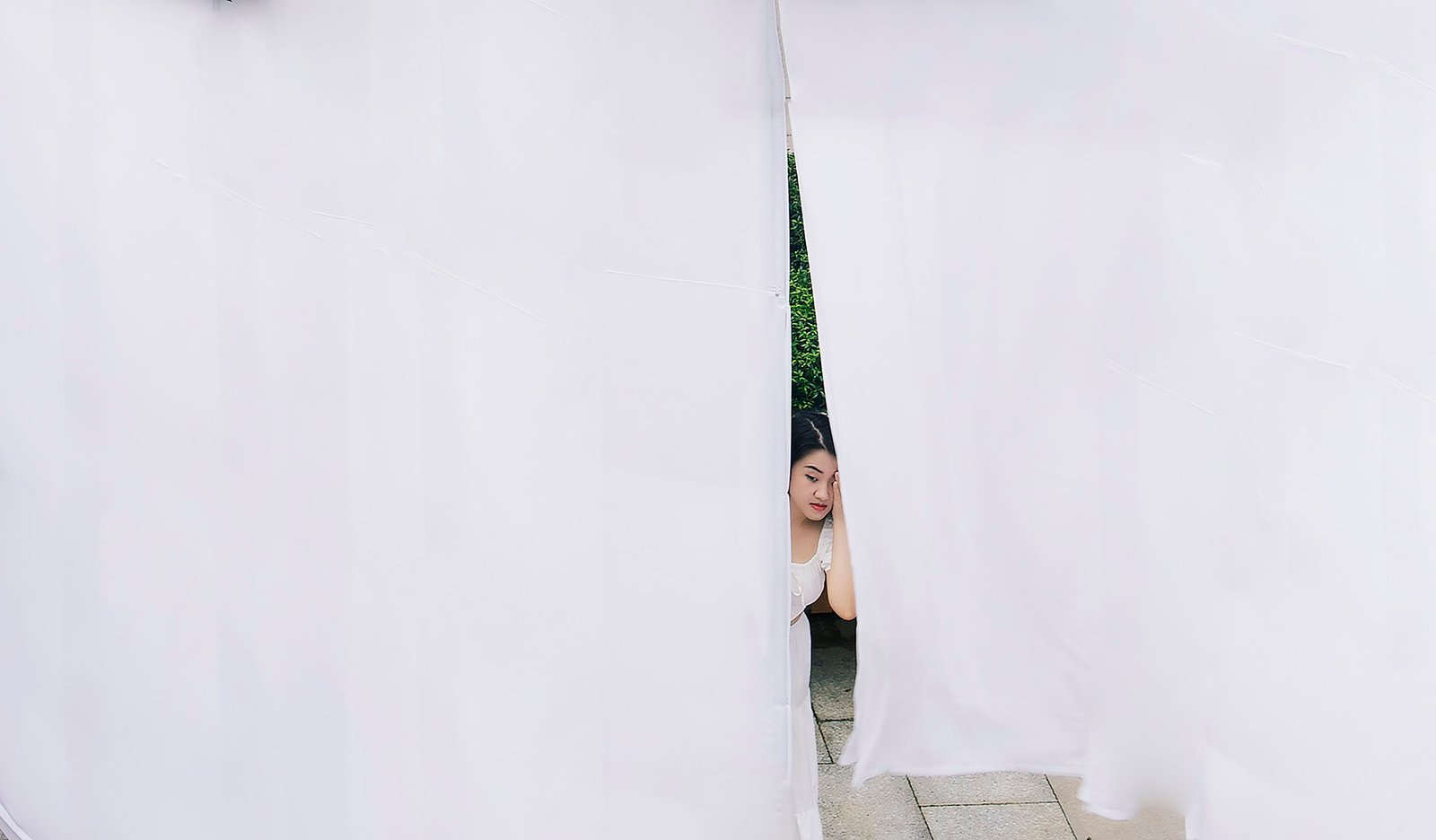
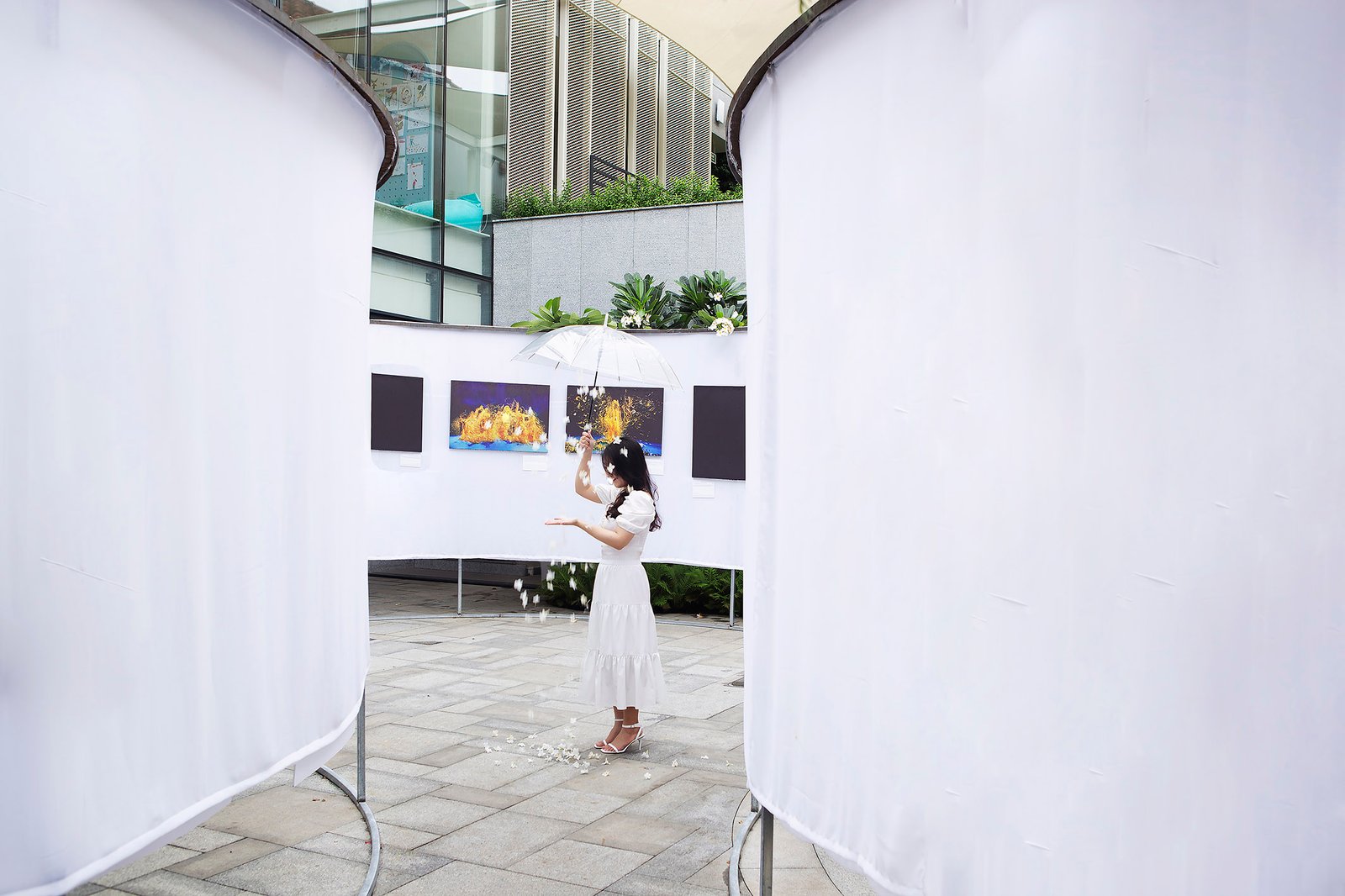
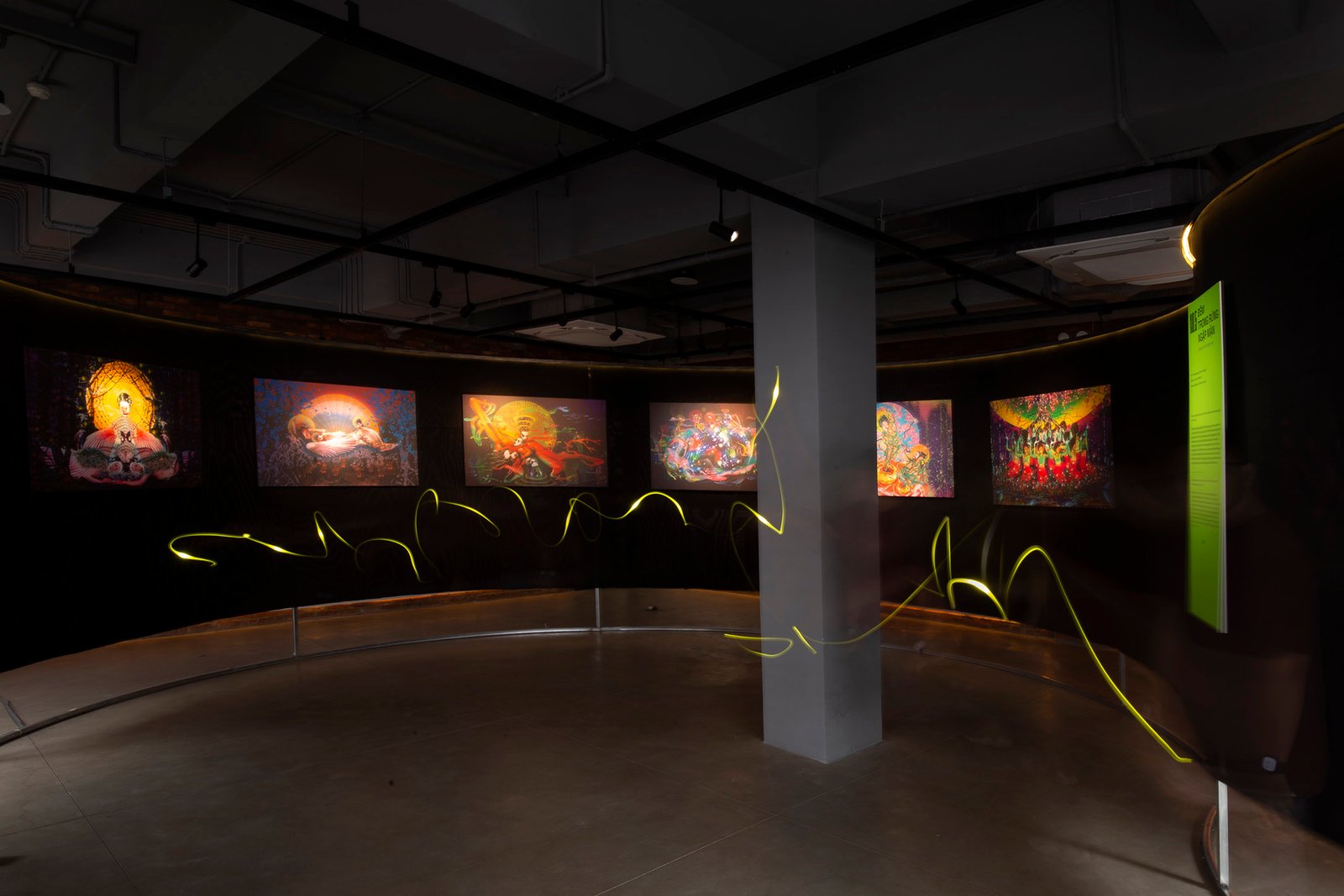
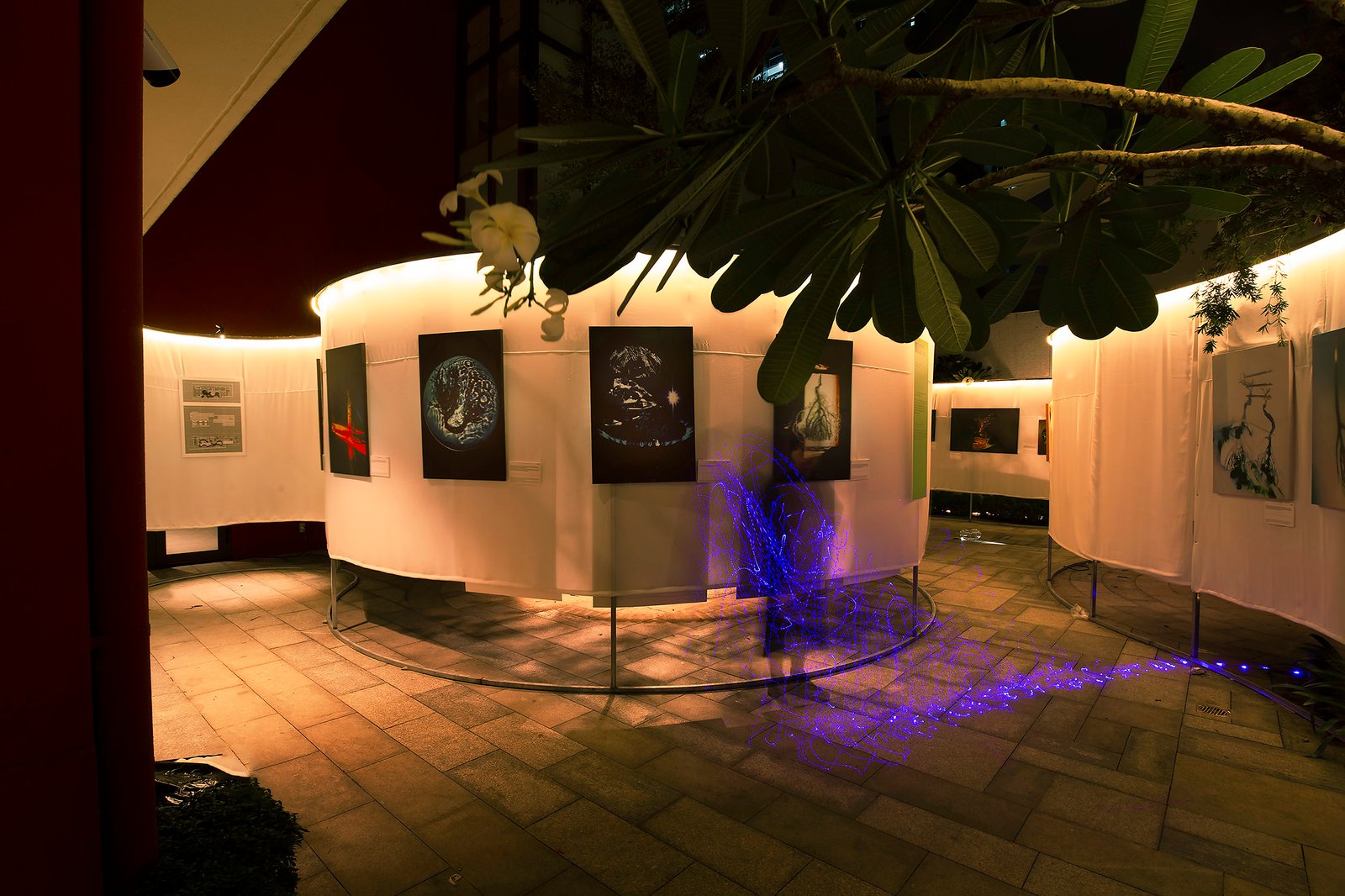
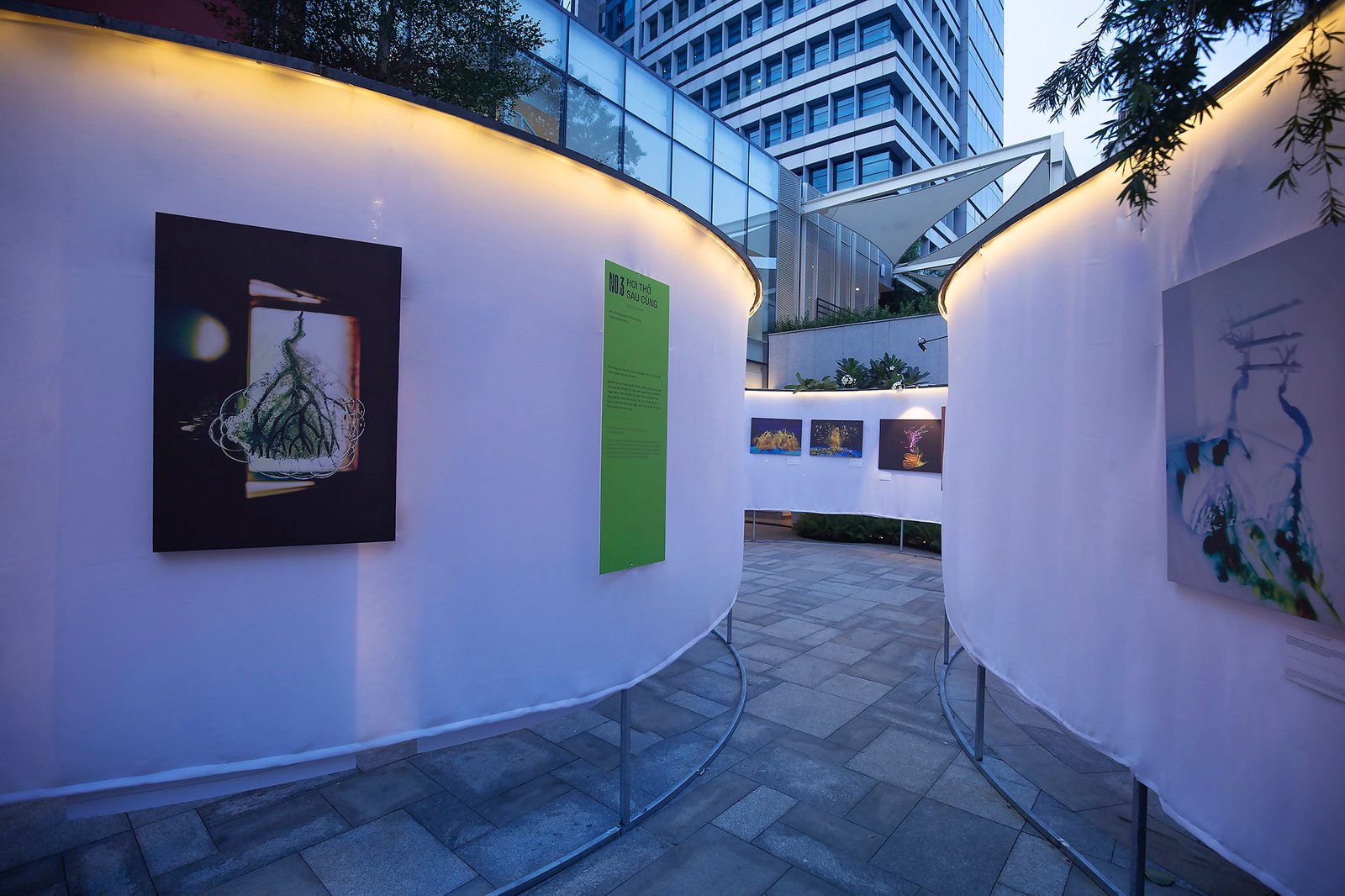
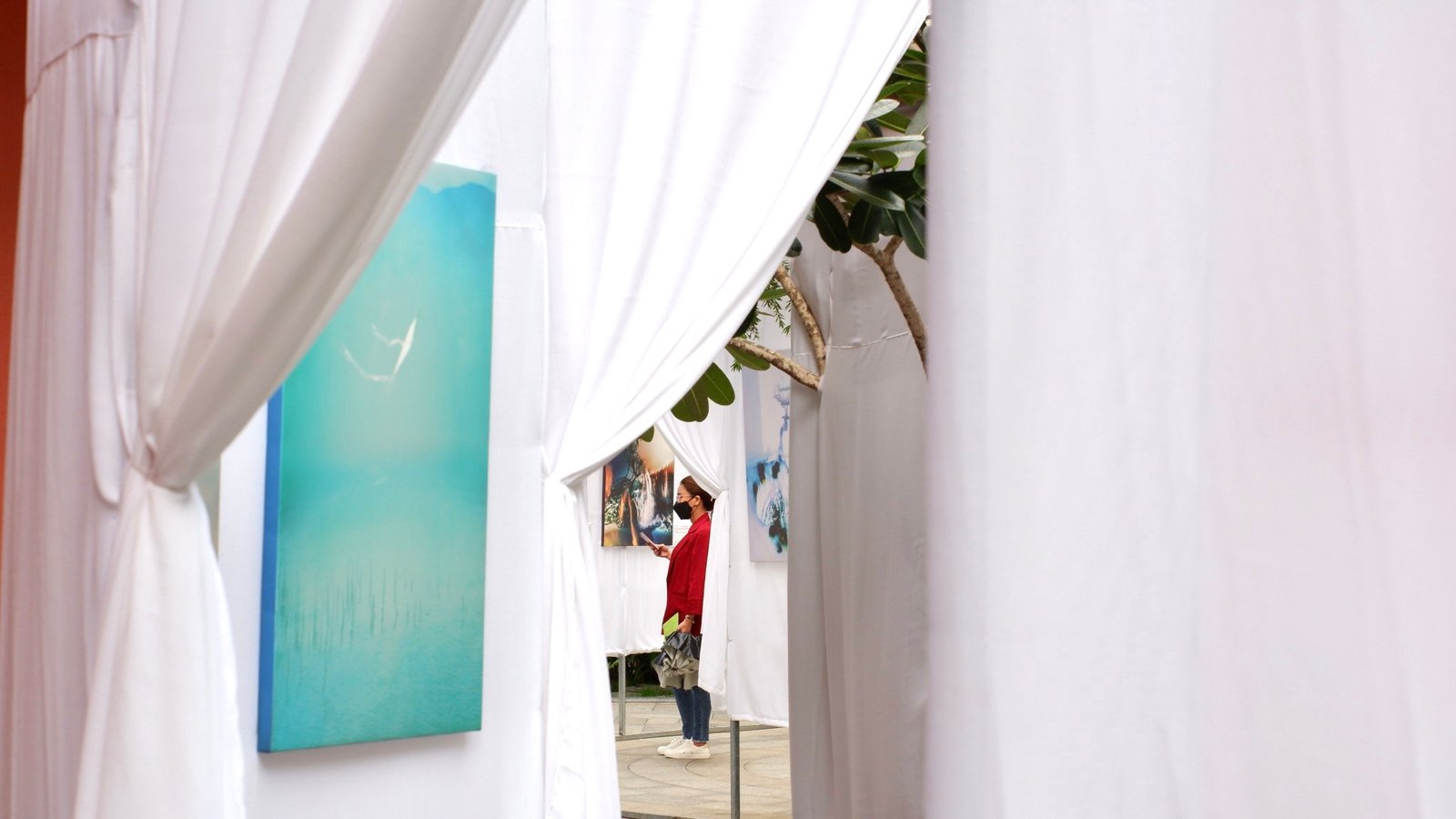
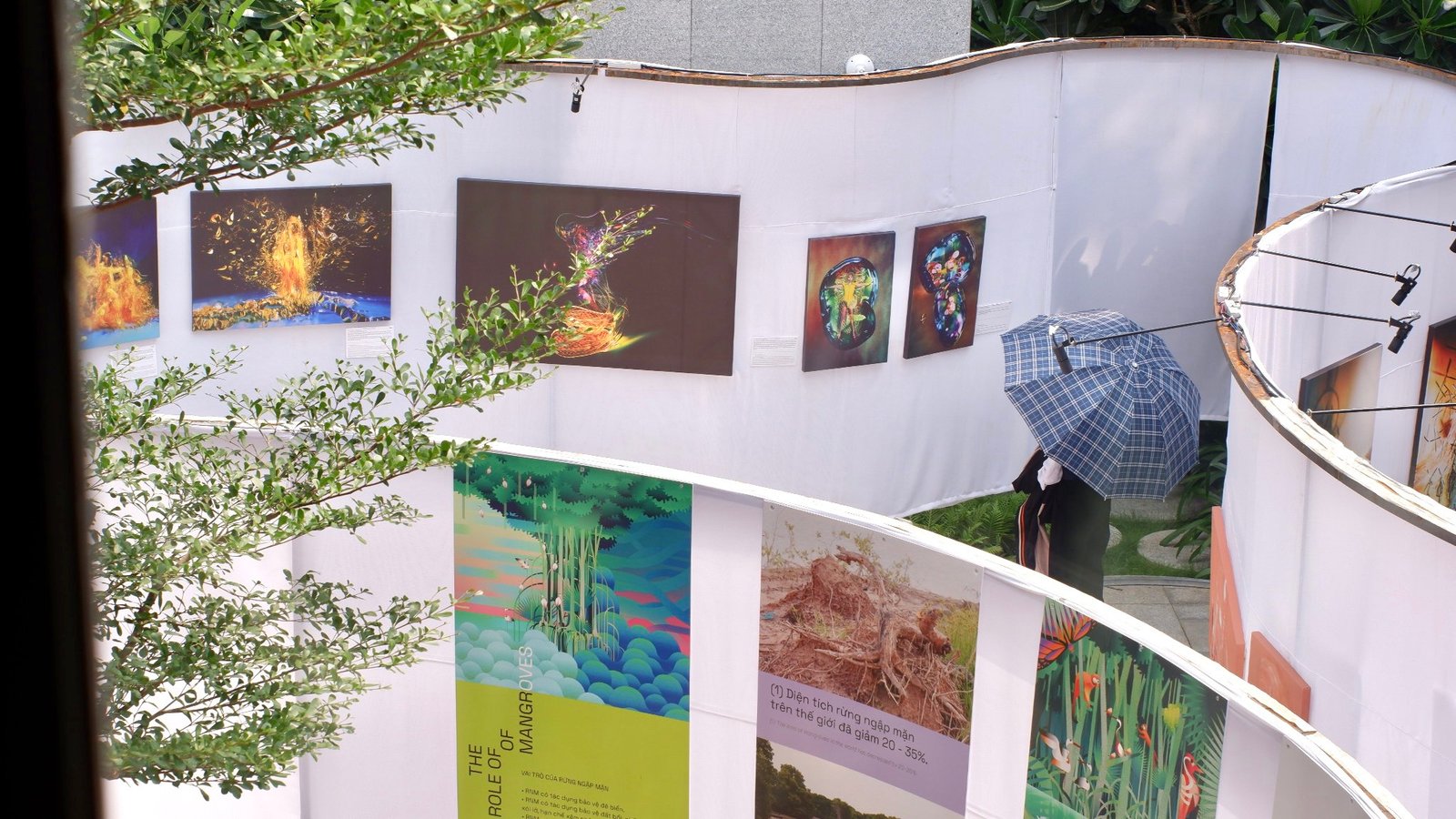
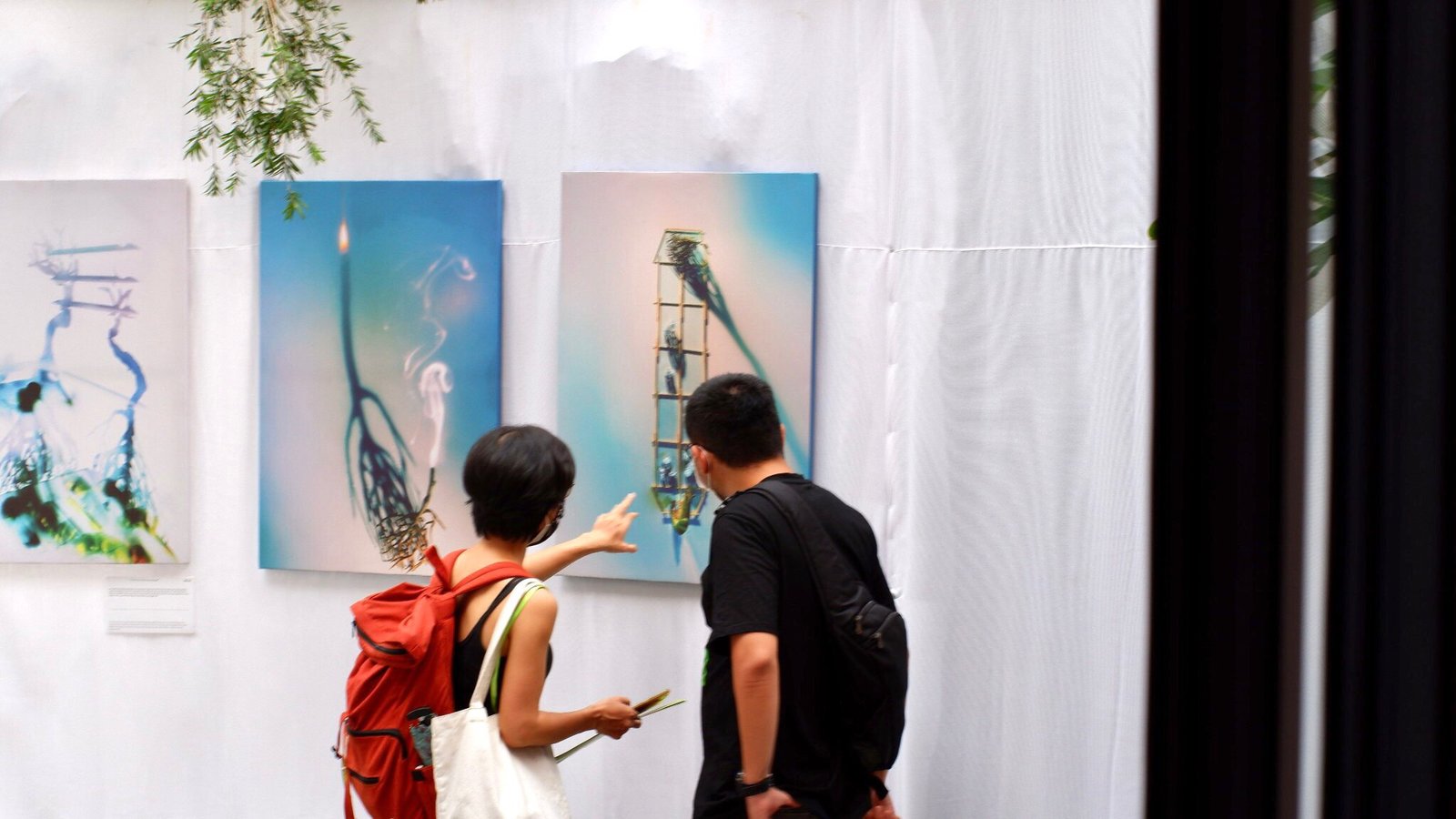
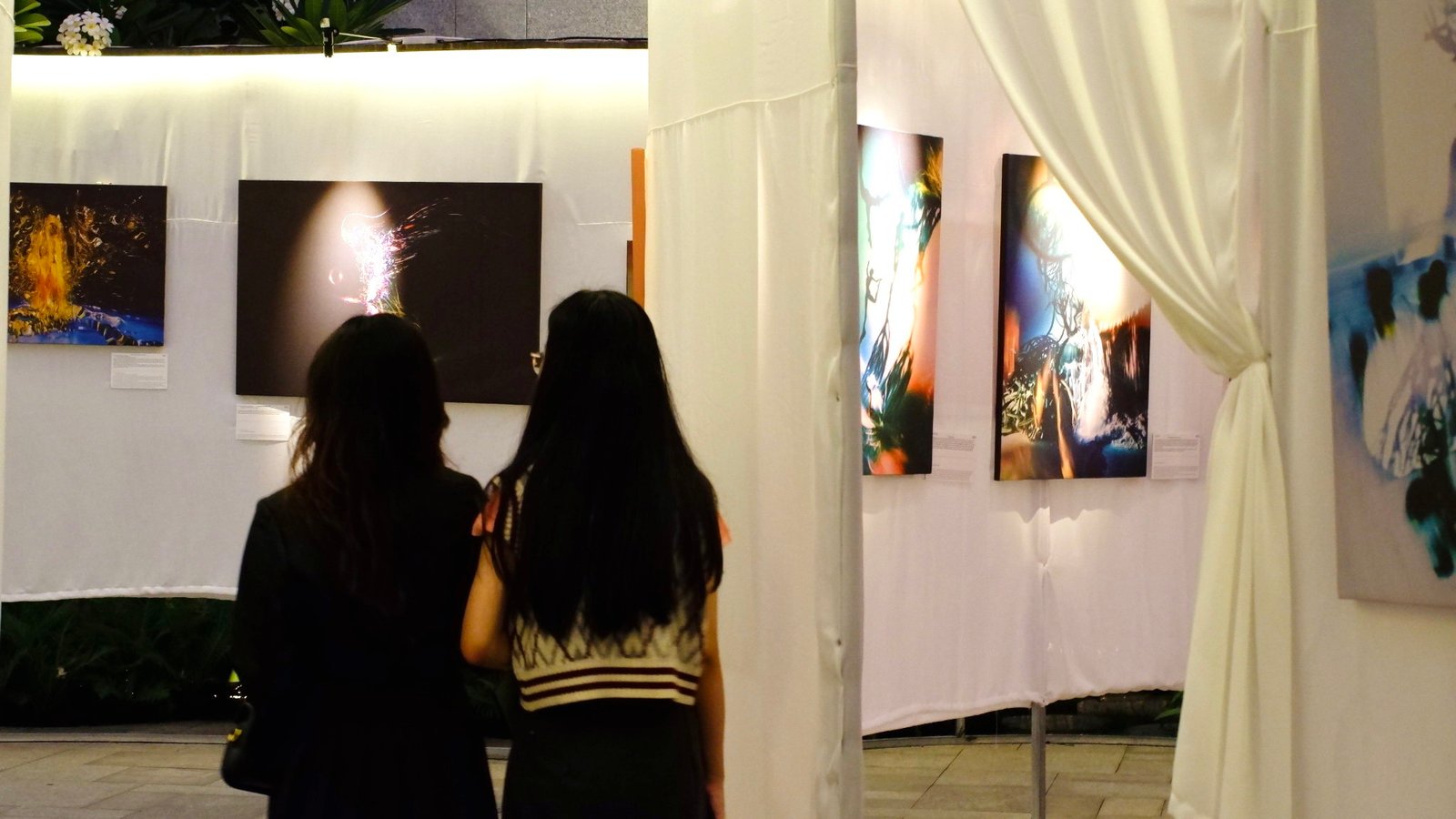
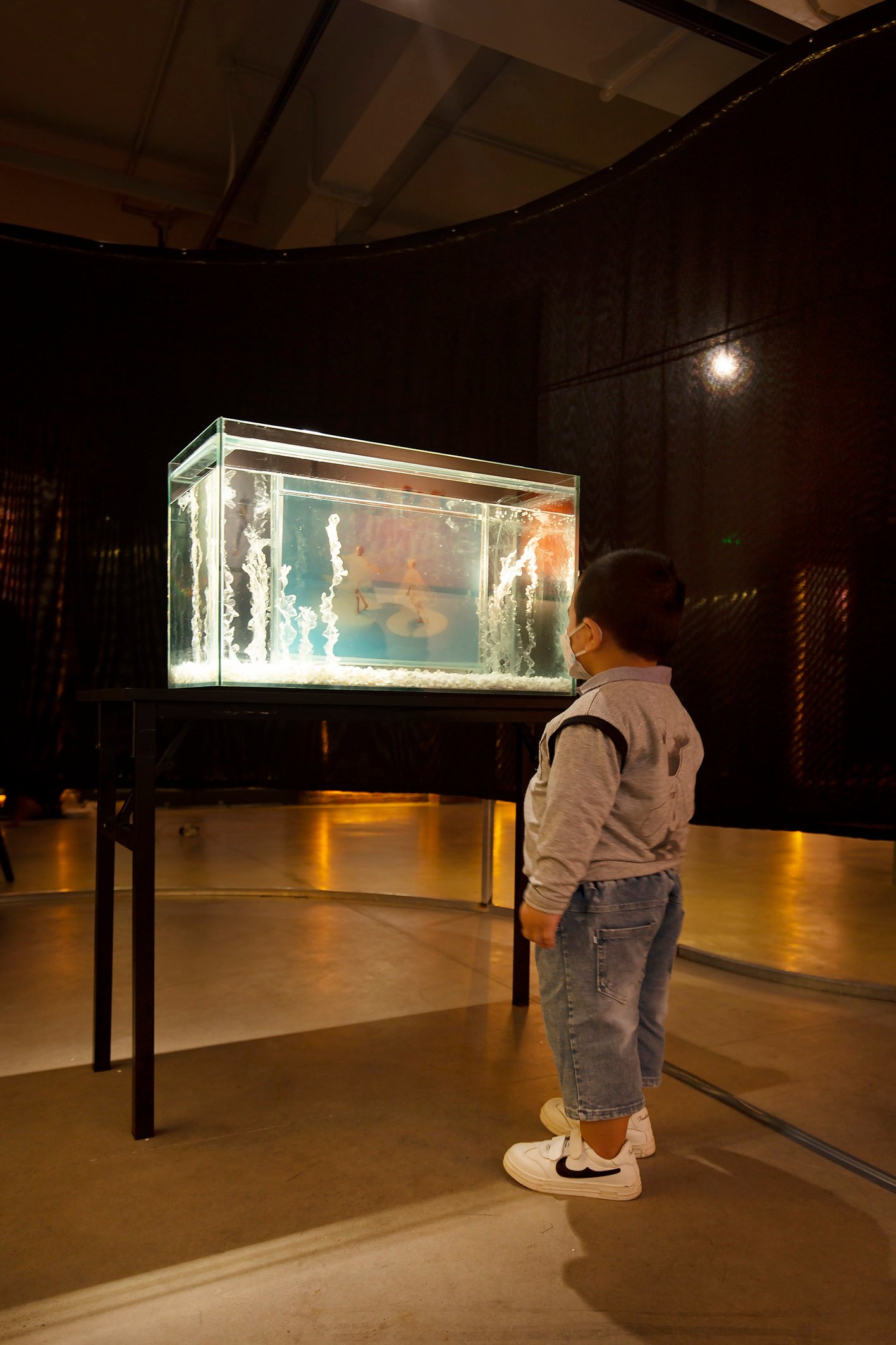
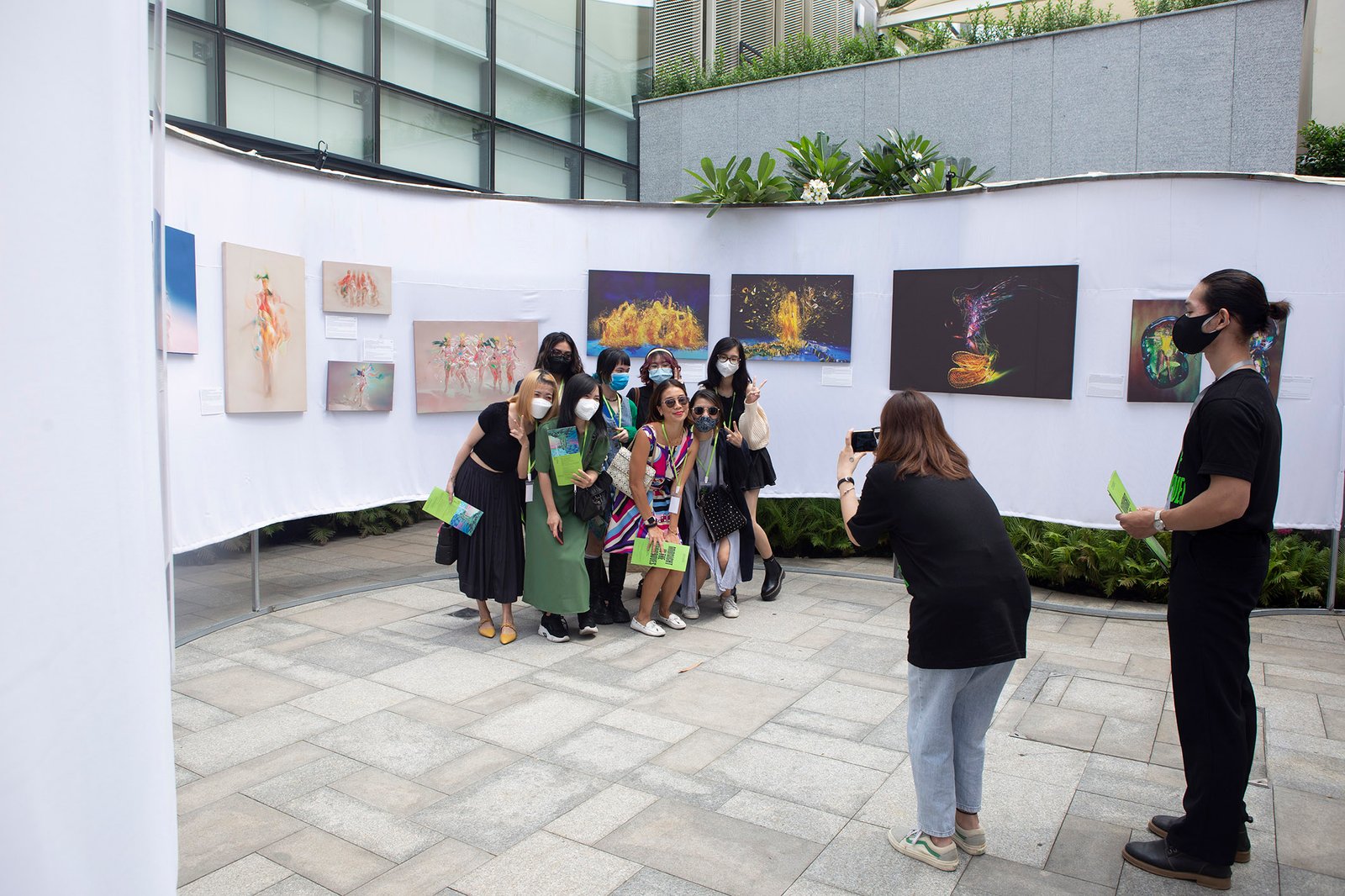
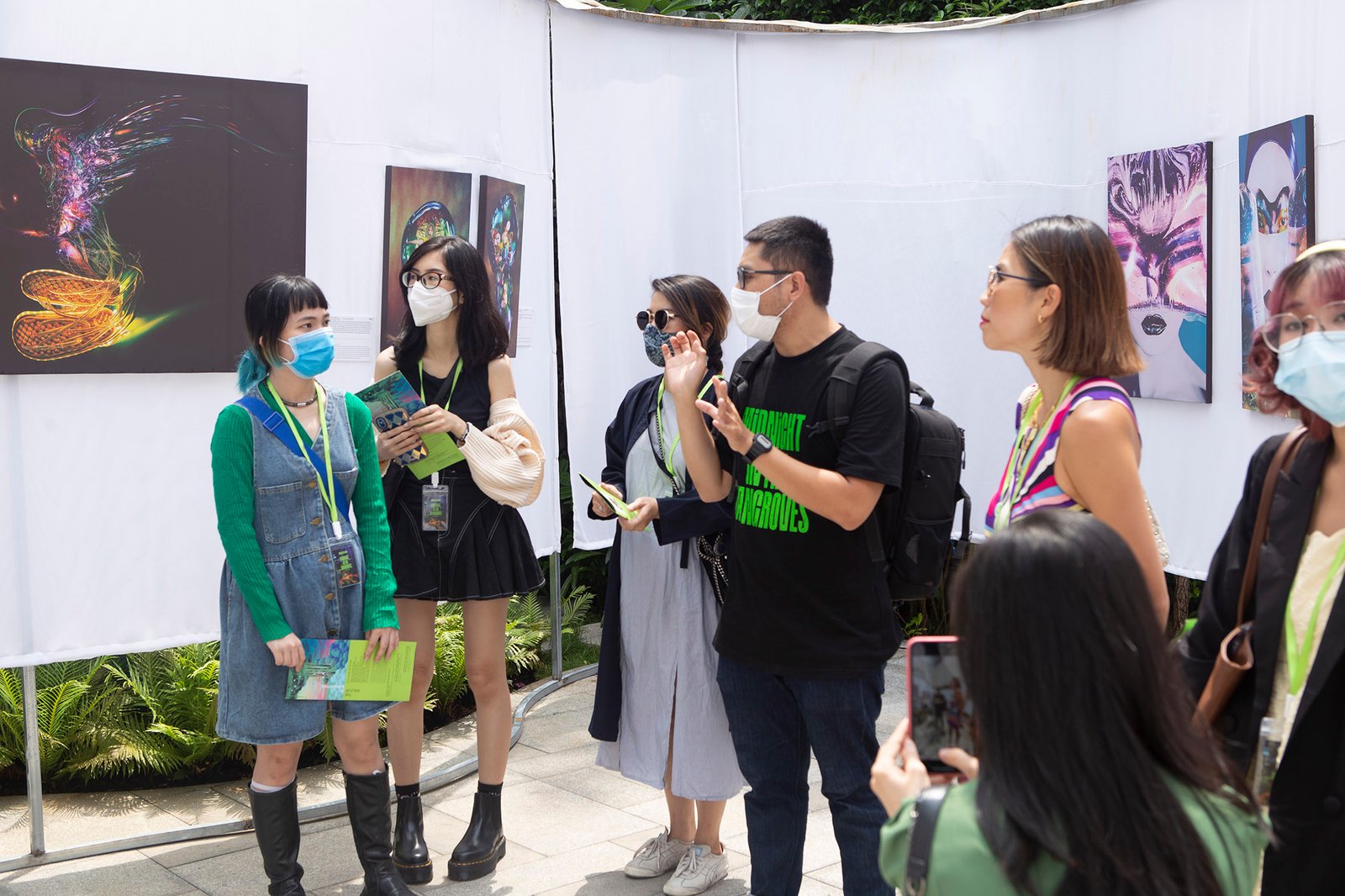
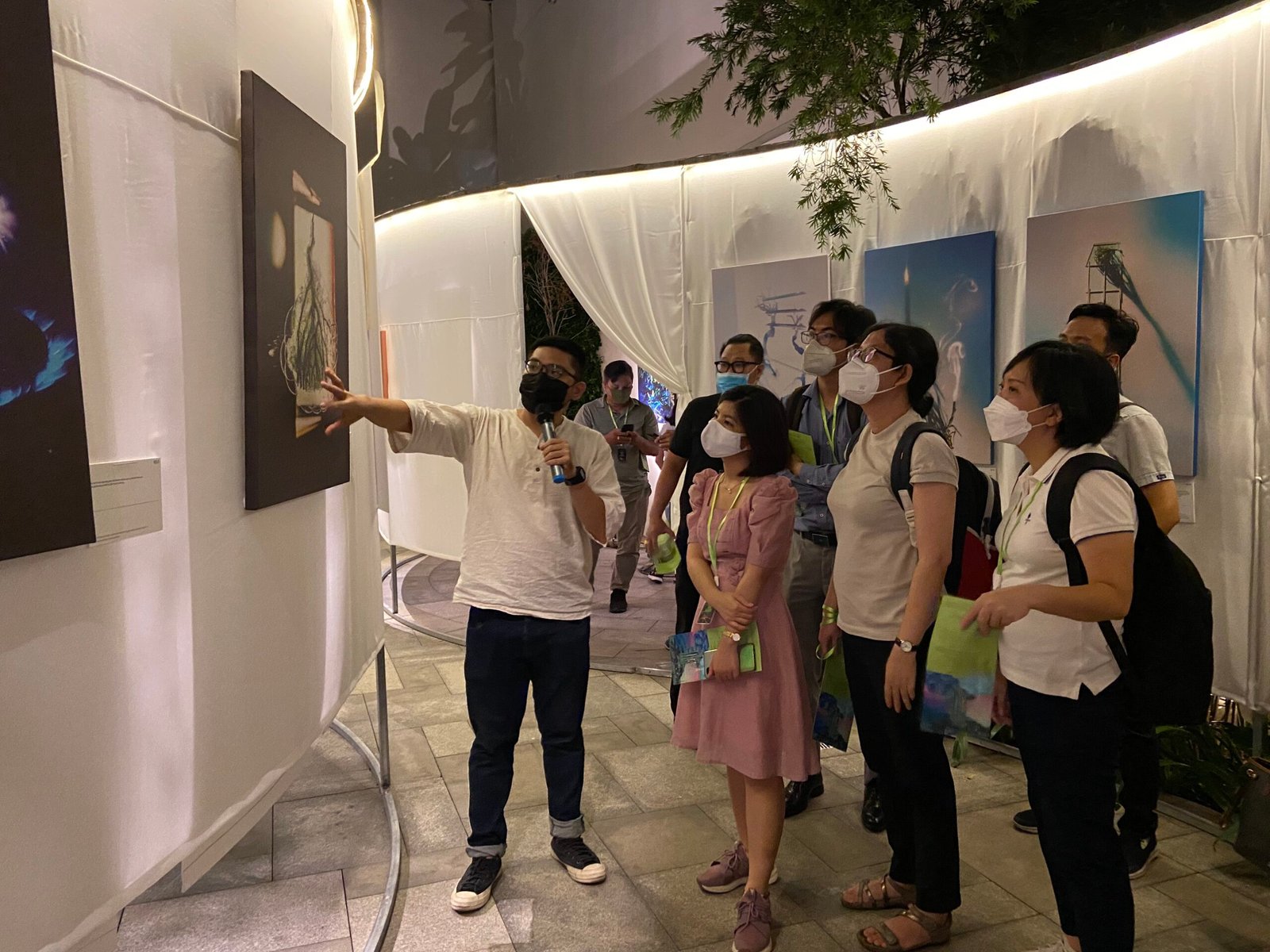
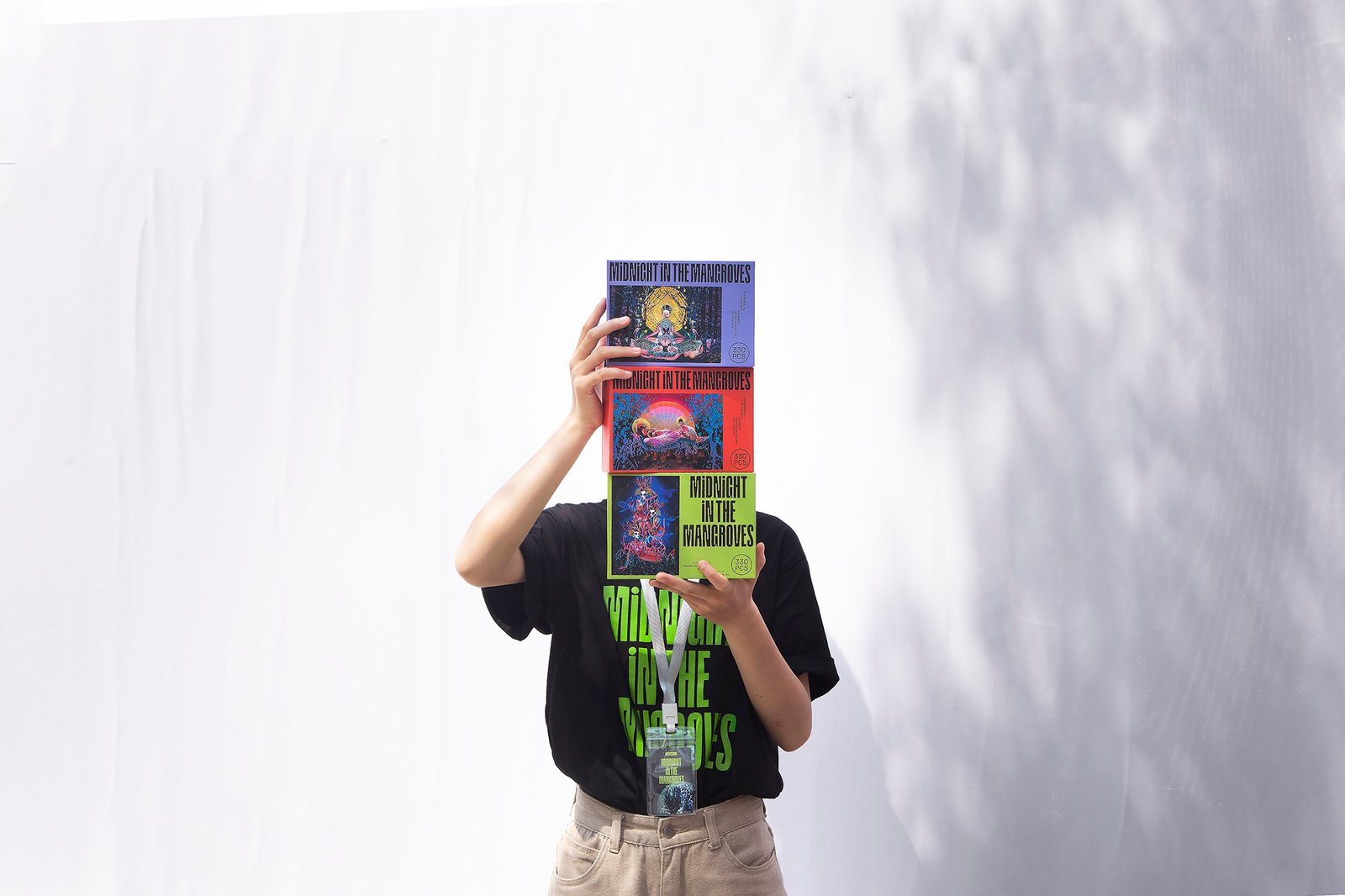
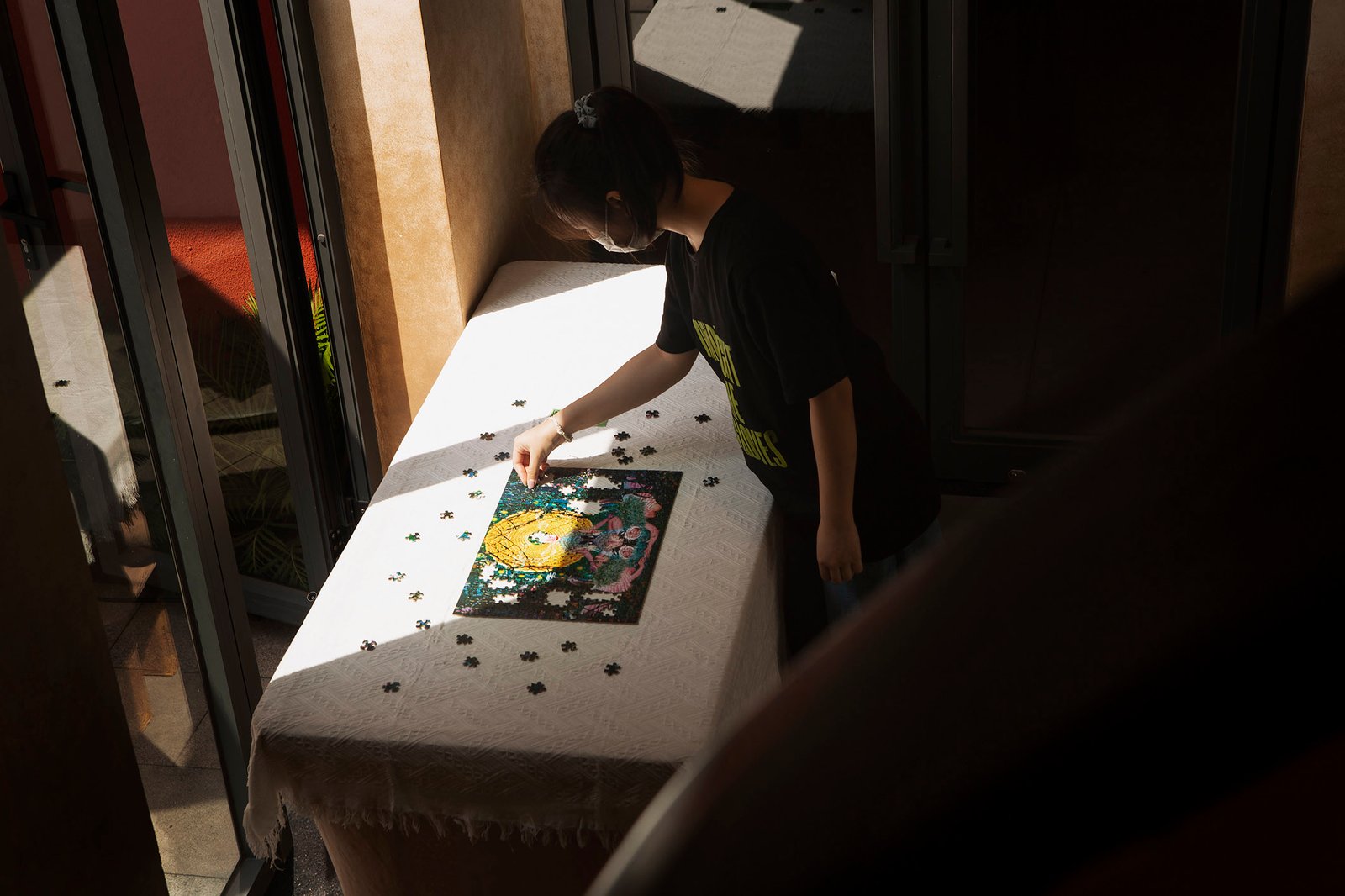
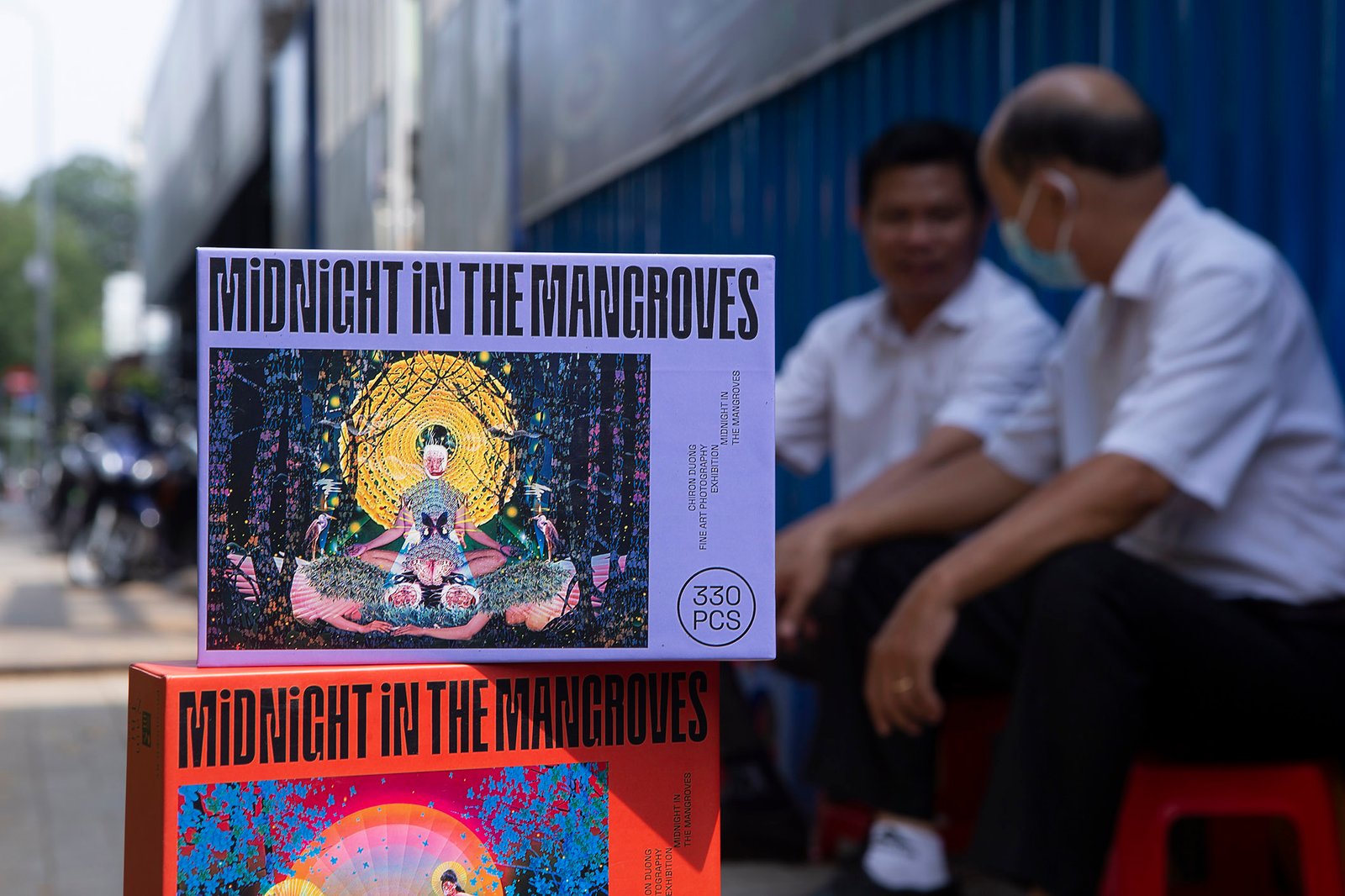
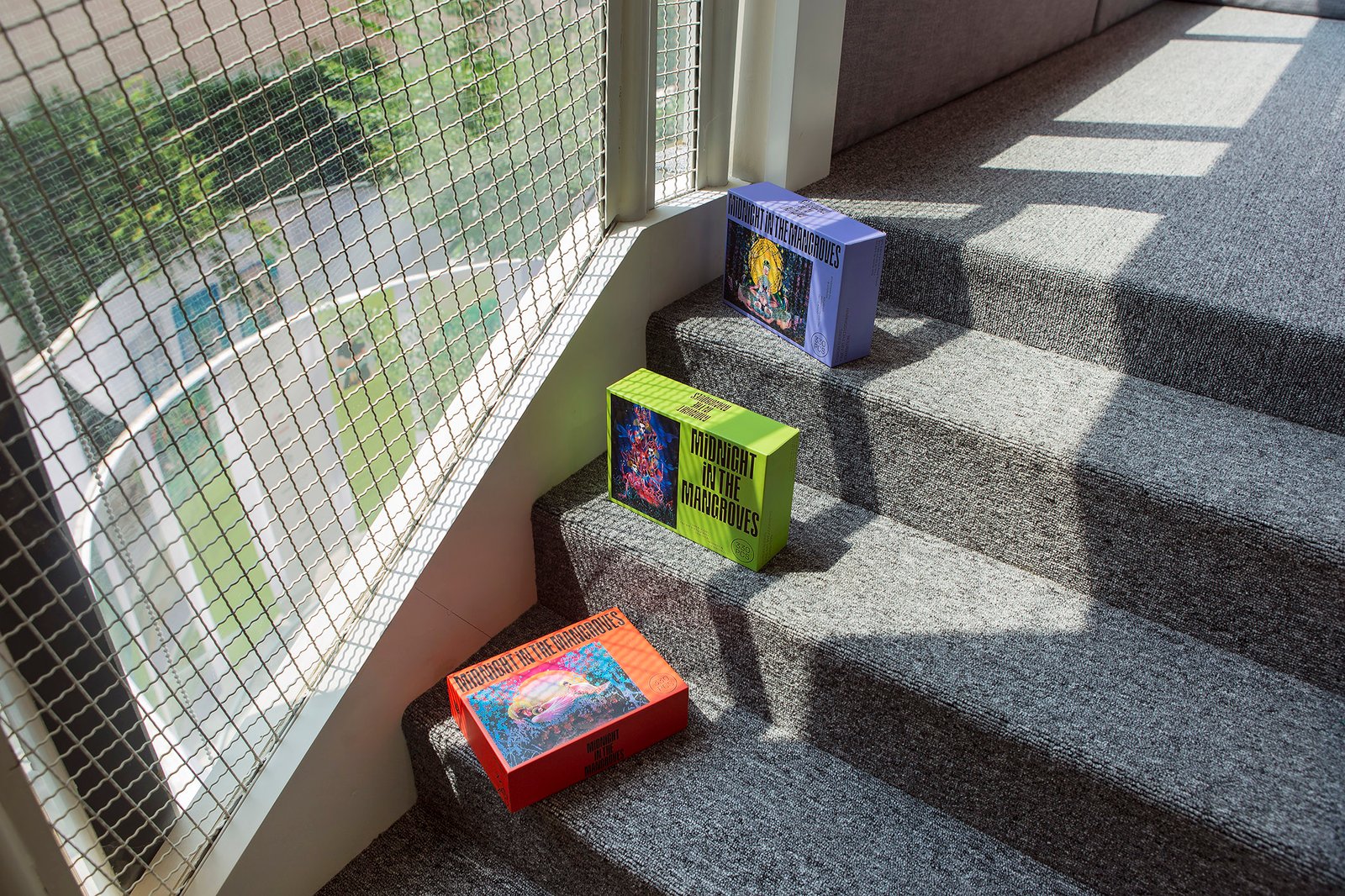
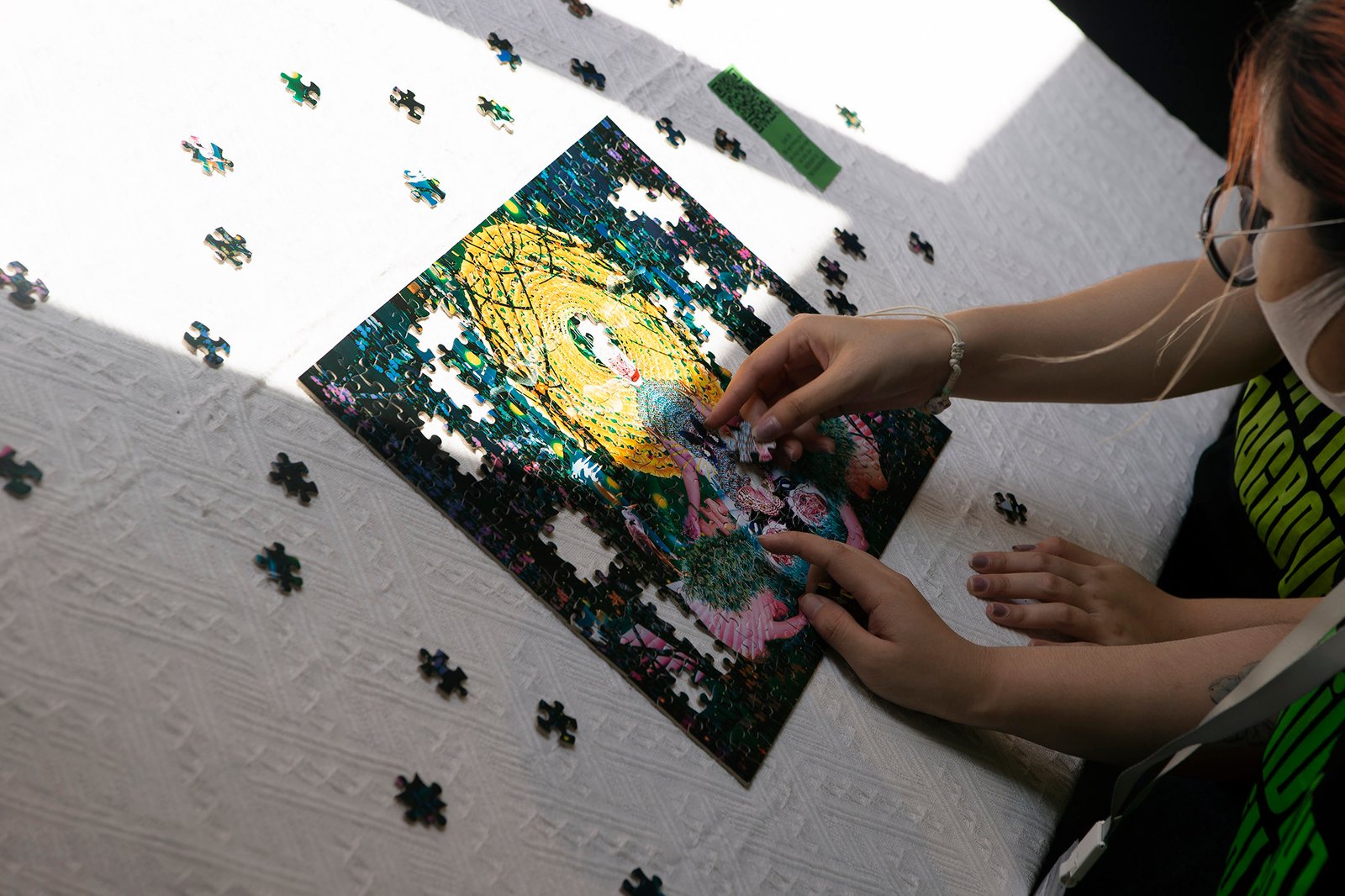
This project by Chilab x Chiron Duong is based on a combination of different genres of photography (Fashion, Still Life, Fine art photography, Photograph manipulation, etc.). Through 6 photography series, the project provides fundamental knowledge on mangroves for audiences.
- Photo series 1: When I was a mangrove tree – Khi toi la mot cai cay
Introduce the biological aspects of mangroves.
- Photo series 2: Journey to the lands of silent heroes – Hanh trinh den vung dat cua nhung nguoi hung tham lang
Introduce the role of mangroves through a series of photos.
- Photo series 3: The last breath – Hoi tho sau cung
Present the sensitivity of mangroves to external and internal factors.
- Photo series 4: The last mangrove tree – Cay ngap man cuoi cung
Indicate the actual situation of mangroves and the personal perspective of Chiron Duong.
- Photo series 5: Taste of wetlands – Tam Vi Tam Cong
Express the feelings about the cultural and spiritual values of mangroves.
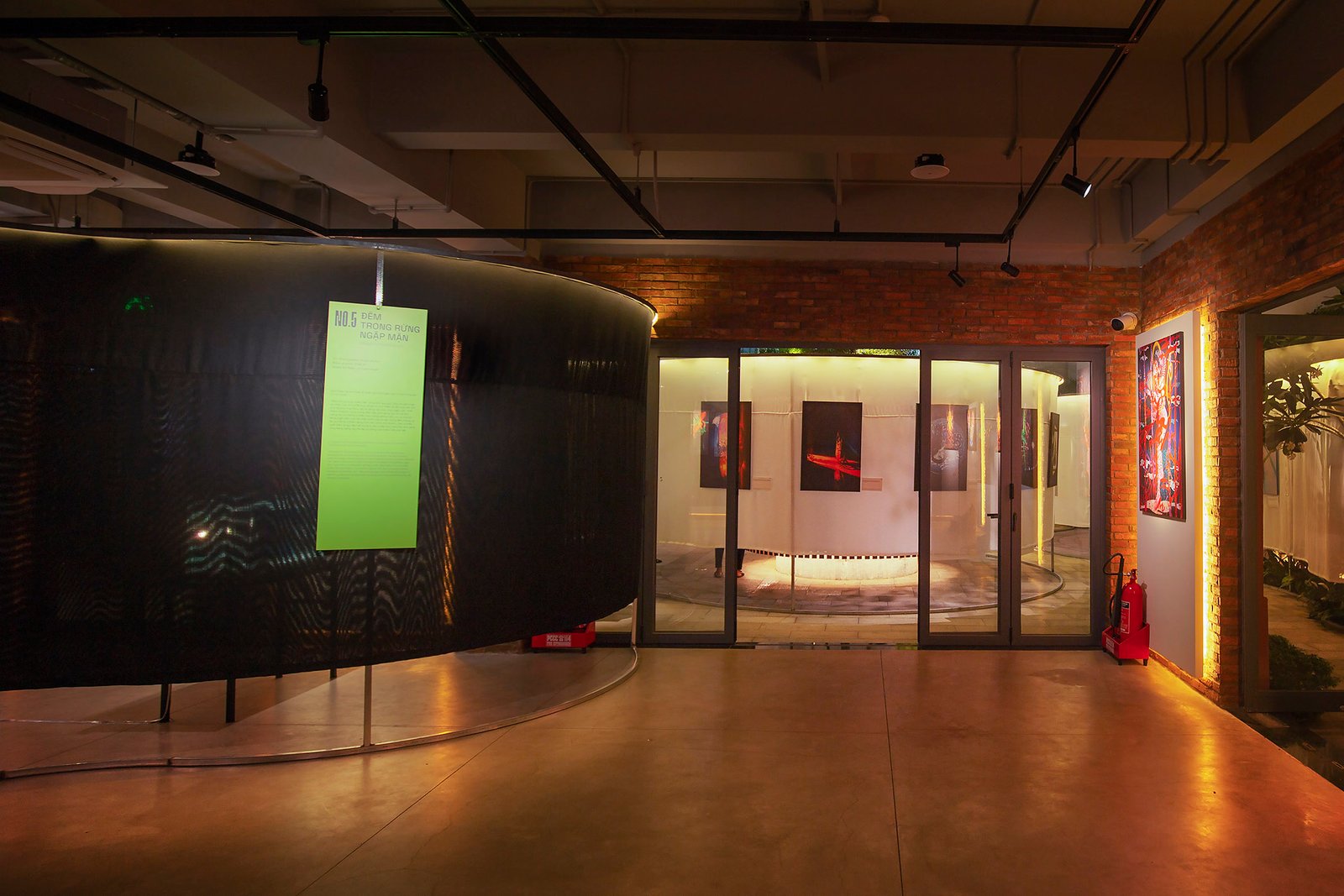
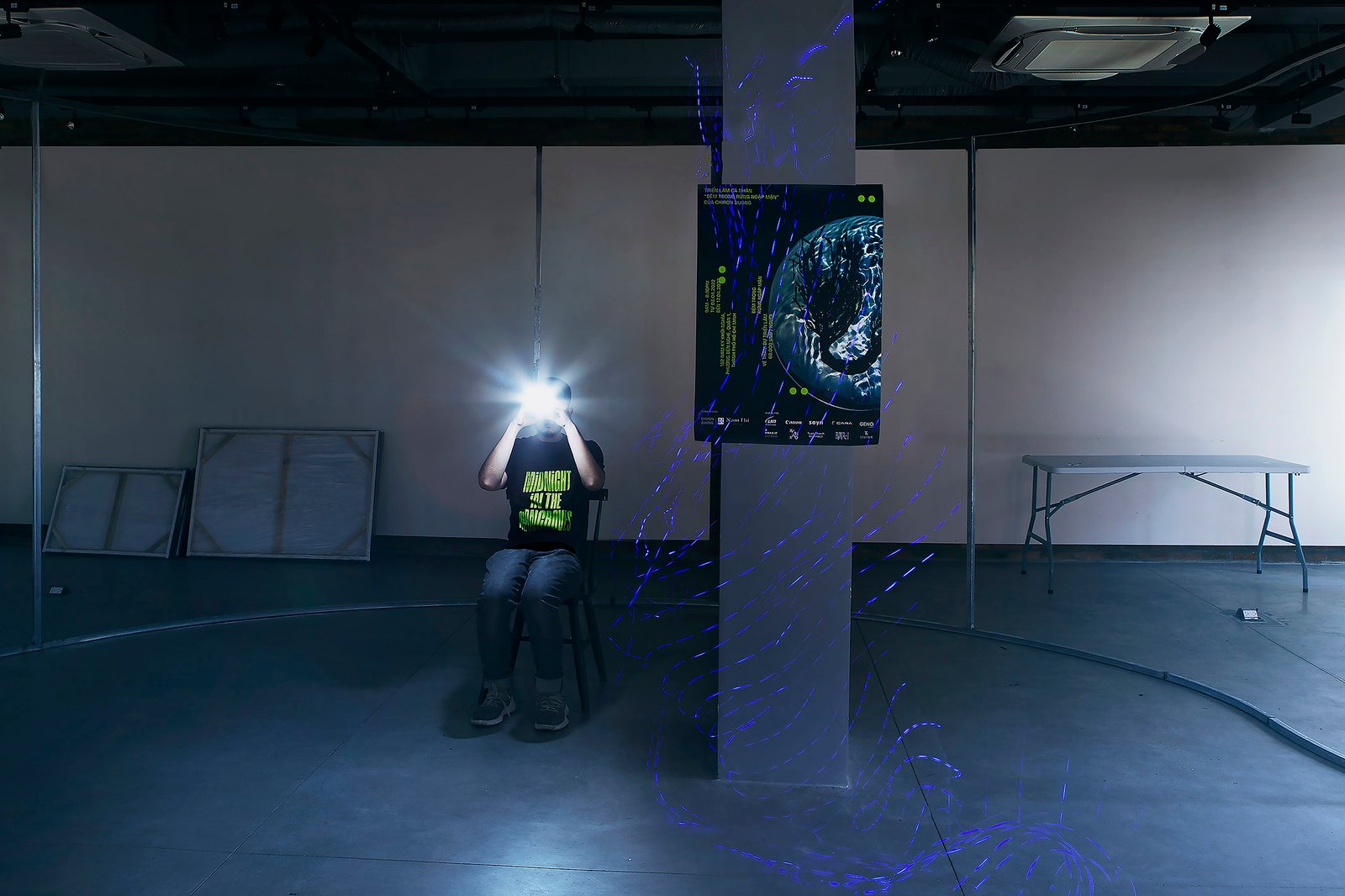
- Photo series 6: Midnight in the mangroves – Dem trong rung ngap man
Introduce the Mangrove Ecosystems and Mangrove Community, combined with spiritual beliefs.
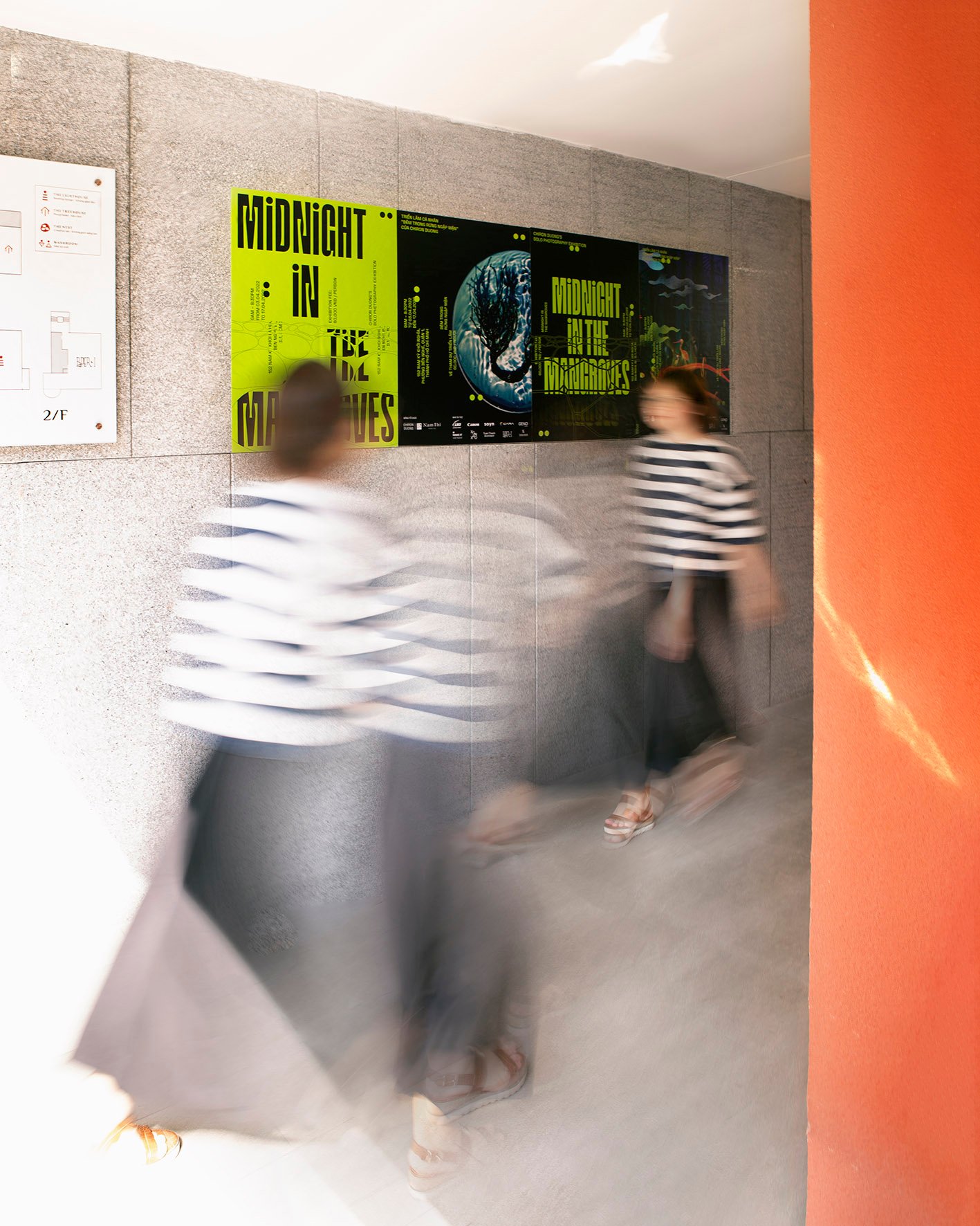
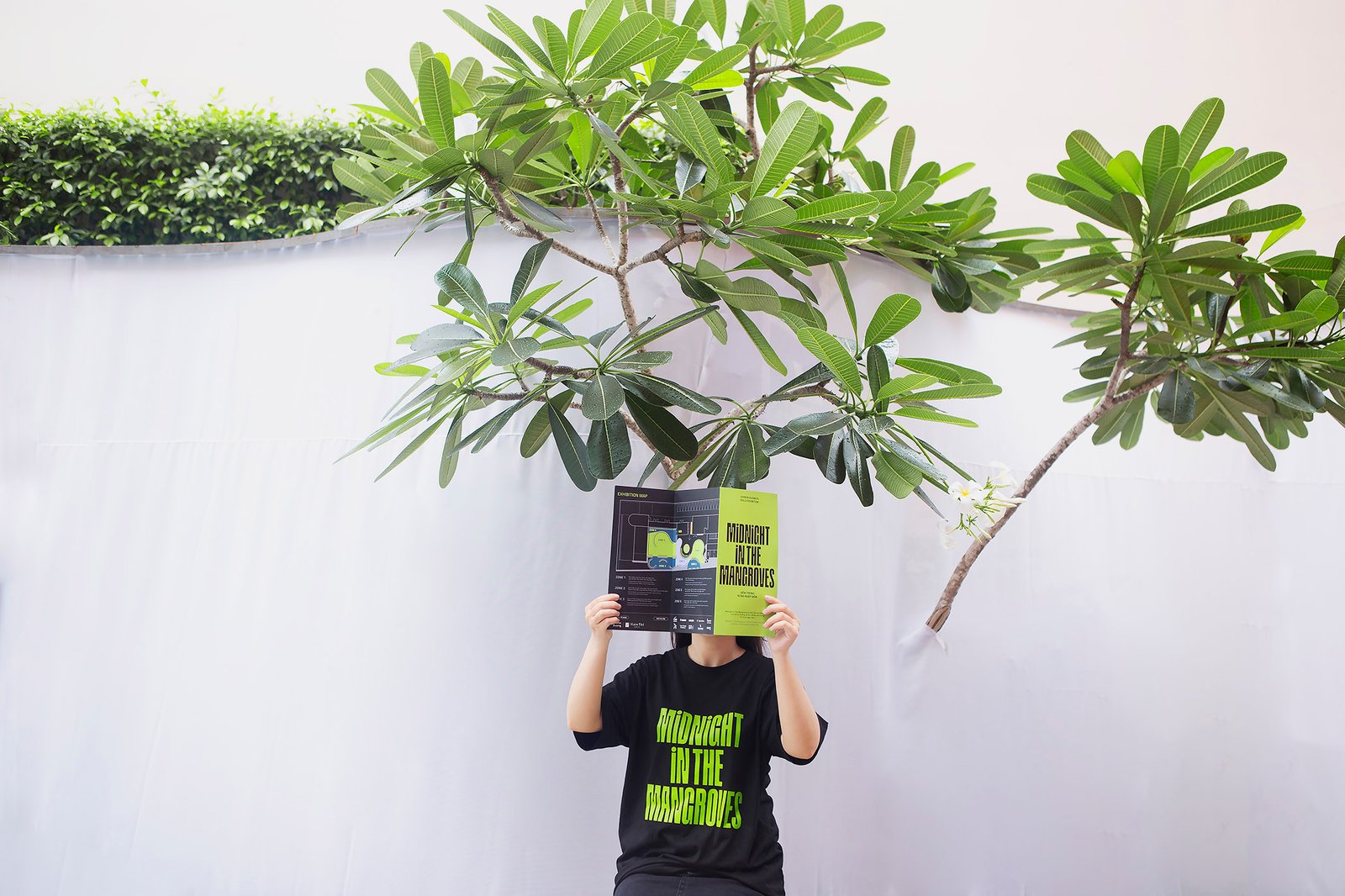
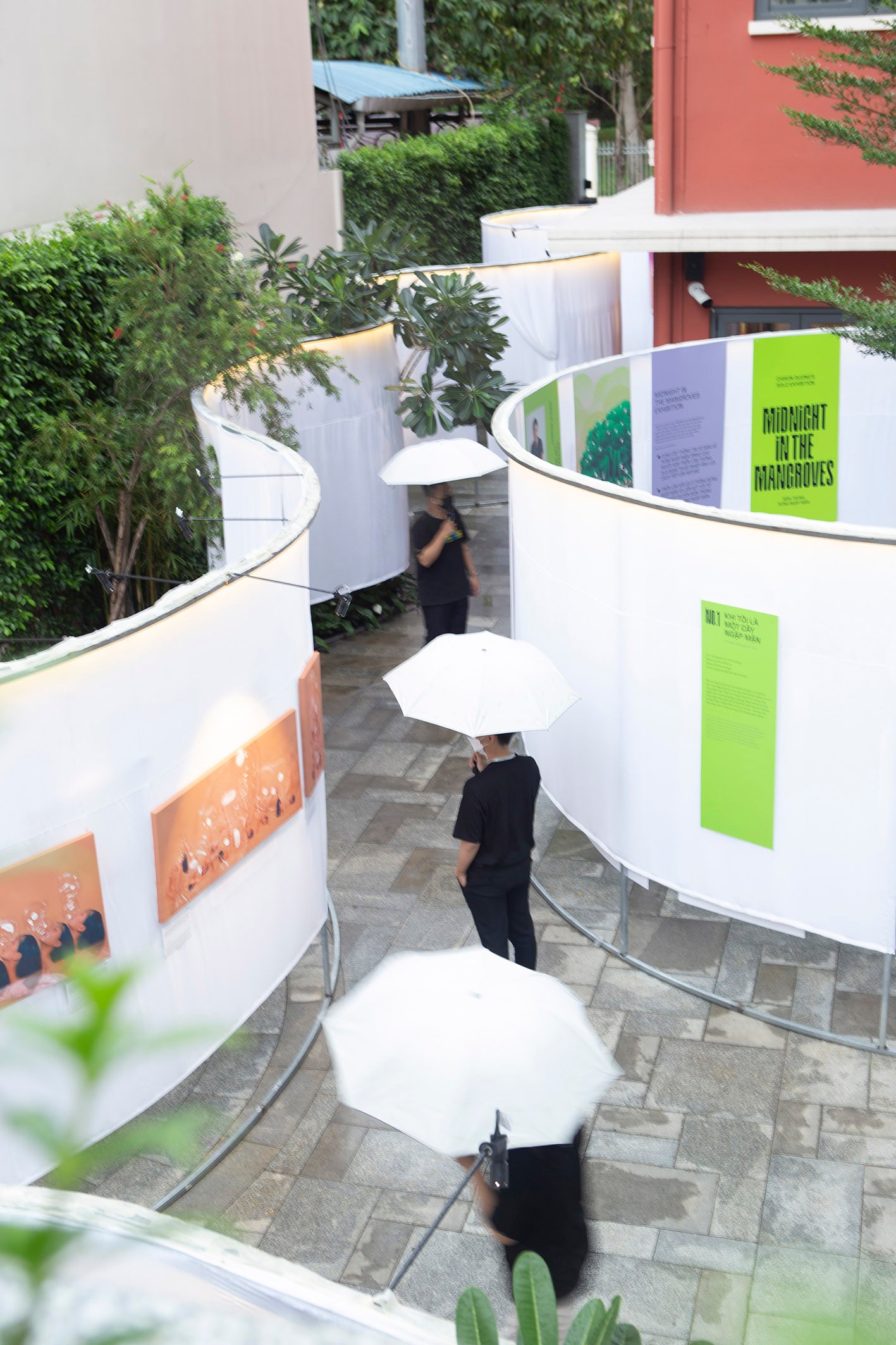
DISPLAY

 |
 |
 |
 |
 |
 |
 |
 |
 |
 |
 |
 |
 |
 |

REFERENCES
Ellison, J., 1993. Mangrove Retreat with Rising Sea-level. Bermuda, Estuarine.
Ellison, J., 2000. How South Pacific Mangroves May Respond to Predicted Climate Change and Sea Level Rise. In: Gillespie, A. and Burns, W. (Eds.). Climate Change in the South Pacific: Impacts and Responses in Australia, New Zealand, and Small Islands States.
Ellison, J., 2004. Vulnerability of Fiji’s Mangroves and Associated Coral Reefs to Climate Change. Prepared for the World Wildlife Fund. Launceston, Australia: University of Tasmania.
Ellison, J., and Stoddart, D., 1991. Mangrove Ecosystem Collapse During Predicted Sea-level Rise: Holocene Analogues and Implications.
Gilman Eric, Joanna Ellison, Richard Coleman, 2007. Assessment of Mangrove Response to Projected Relative Sea-level Rise and Recent Historical Reconstruction of Shoreline Position.
Phan Nguyen Hong, 1993. Climate and the Mangrove Ecosystem. In: TIEMPO, Global Warming and the Third World. Issue 10, Dec. 1993.
Phan Nguyen Hong et al., 1999. Vietnamese mangrove forests. Agriculture Publishing House.
Phan Nguyen Hong, Le Xuan Tuan, Vu Dinh Thai, 2007. Effects of sea-level rise on mangrove ecosystems and resilience. Sea Magazine, Issue 7-8/2007. Vietnam Union of Science and Technology Associations.
Islam M.R., 2004. Where Land Meets the Sea: A Profile of the Coastal Zone of Bangladesh. Dhaka: University Press Limited.
Keith R. Thompson et al., 2007. Suppressing Bias and Drift of Coastal Circulation Models Through the Assimilation of Seasonal Climatologies of Temperature and Salinity.
Massel, S.R., Furukawa K., Brinkman, R.M., 1999. Surface Wave Propagation in Mangrove Forests.
Miyagi, T.E., 1998. Mangrove Habitat Dynamics and Sea-level Change. Tohoku University.
MONRE, 2010. Summary report on scenarios of sea-level rise and risk mitigation in Vietnam.
Naidoo, G., 1983. Effects of Flooding on Leaf Water Potential and Stomatal Resistance in Bruguiera gymnorrhiza.
Nunn, P.D., 2000. Significance of Emerged Holocene Corals around Ovalau and Moturiki Islands, Fiji, Southwest Pacific.
Semeniuk, V., 1994. Predicting the Effect of Sea-level Rise on Mangroves in Northwestern Australia.
Snedaker, S., Meeder, J., Ross, M., and Ford, R., 1994. Discussion of Ellison, Joanna C., & Stoddart, David R., 1991. Mangrove Ecosystem Collapse During Predicted Sea-level Rise: Holocene Analogues and Implications.
UNEP, 2007. Global Environmental Outlook: Environment for Development. Nairobi. Vietnam Mekong River Commission, 1993. Saltwater intrusion in the Mekong Delta.
Wouters, D. Chambers, and EJO Schrama, 2008. GRACE Observes Smallscale Mass Loss in Green-land.
Panel on Climate change. Cambridge University Press.
Phan Nguyen Hong, Vietnamese Mangrove Forest, Agricultural Publishing House, Hanoi 1999. The role of mangrove and coral reef ecosystems in disaster reduction and improvement of life in coastal areas. Agriculture Publishing House, Hanoi 2007. History of coastal wetland research in Vietnam, Hanoi – 2004.
Nguyen Hoang Tri, The mangrove ecology, Agricultural Publishing House, Hanoi 1999.
Nguyen Duc Cu et al. 1996. Study and survey of tidal wetlands in coastal areas and islands in the Northeast of Vietnam.